Erica Salm Rench on AI Education and Building an AI-Ready Workforce
In this interview with ACEA, Erica Salm Rench, CMO of Sidecar, explains why it's "leadership malpractice" to skip AI education, shares practical quick wins for associations, and previews how AI agents will reshape professional roles.
The discussion covers Erica's journey from higher education marketing to becoming an AI evangelist, the critical importance of AI literacy for organizational leaders, and how Sidecar is building a movement around AI education for the association community.
We examine strategies for overcoming fear and resistance to AI adoption, practical approaches to implementing AI in associations, and the future of work in an AI-powered world. Additionally, the article explores how associations can create quick wins with AI and build personalized member experiences at scale.
Let's dive in!
Watch the full interview with Erica on ACEA’s YouTube channel below.
Interview Snapshot
AI as a Leadership Imperative: Why it is leadership malpractice to not mandate AI education for teams.
From Fear to Fluency: How to build psychological safety and help teams embrace AI adoption.
The AAiP Certification: Sidecar's approach to AI education through foundational coursework and ongoing learning.
Quick Wins Over Boiling the Ocean: Practical strategies for implementing AI without overwhelming systems overhauls.
Personalization at Scale: How AI enables associations to create meaningful member connections.
The Future of Work: How AI agents will transform roles from executing tasks to supervising intelligent systems.
Lessons from Early Adoption: What selling AI before the market was ready revealed about change management and communication.
Introduction: The Emergence of AI Education for Associations
As AI continues to reshape industries, associations face a critical question: how do they prepare their teams and members for a fundamentally different future?
Erica Salm Rench brings a unique perspective to this challenge. With a background spanning higher education marketing, digital agency operations, and AI-powered technology companies, she has spent years at the intersection of technology adoption and organizational change.
This interview, conducted by Kyle Kahveci from ACEA, reveals how AI education is becoming essential for association professionals who want to remain relevant in a rapidly evolving landscape.
CE App supports the growing need for AI education in associations by providing comprehensive continuing education tracking, engagement, and compliance solutions. As organizations develop new AI-focused certifications and training programs, managing learning requirements becomes increasingly complex, a challenge CE App helps solve.
Meet the Expert
Introducing Erica Salm Rench
Erica Salm Rench brings a diverse combination of marketing expertise and technology innovation to the association space. She started her career in higher education, working in Tulane University's undergraduate admission office, where she managed website operations and all electronic communications.
Her journey includes running operations at the largest digital marketing company in the Gulf South, serving approximately 1,200 clients, and then spending three years as COO of rasa.io, an AI-powered email personalization company. She is now a leader of Sidecar, a Blue Cypress organization dedicated to educating the association community on AI.
Sidecar's Mission to Transform AI Literacy
"We try to create resources so that we can meet folks wherever they are on their AI education journey," Erica explains.
This vision drives Sidecar's commitment to making AI education accessible through multiple channels and formats.
The Journey to AI Education
From MarTech to AI: A Practitioner's Path
Erica's journey into AI began during the early days of marketing technology, when companies like HubSpot, Salesforce, and MailChimp were just emerging.
"I was very captivated with how those tools allowed me to do my job so much more efficiently and effectively," Erica recalls.
At the digital marketing agency, managing 1,200 clients required extreme discipline in package construction. Certain services, including email campaigns, graphic design, and video, came at a much higher premium because they couldn't be systematized effectively. When she was introduced to AI-powered email technology eight years ago, Erica saw the opportunity for AI to eventually make those specialized services standard.
The Continuing Importance of Human Connection
Despite her focus on technology, Erica emphasizes that human connection remains essential.
"There is still major space for human connection. You need to be able to effectively market and stay in front of people digitally. There's no doubt about it, but people really connect the dots when they see a face, and they hear a story that also relates to all the electronic touch points that they see."
Significant Challenges in AI Adoption
Kyle Kahveci: You mentioned that it's really a disservice for leaders not to educate their teams on AI. Why do you see AI literacy as such a core leadership imperative right now?
Lack of AI Education as Leadership Malpractice
Erica identifies a fundamental responsibility that leaders cannot ignore:
"Something we can all agree on is that it's changing the world. Now, what exactly the world will look like in five or even two or three years, no one quite knows. I don't even think folks at the big AI companies know exactly what the world's going to look like."
She points to a critical problem: employees focused on day-to-day work become isolated from broader changes unless they are committed lifelong learners.
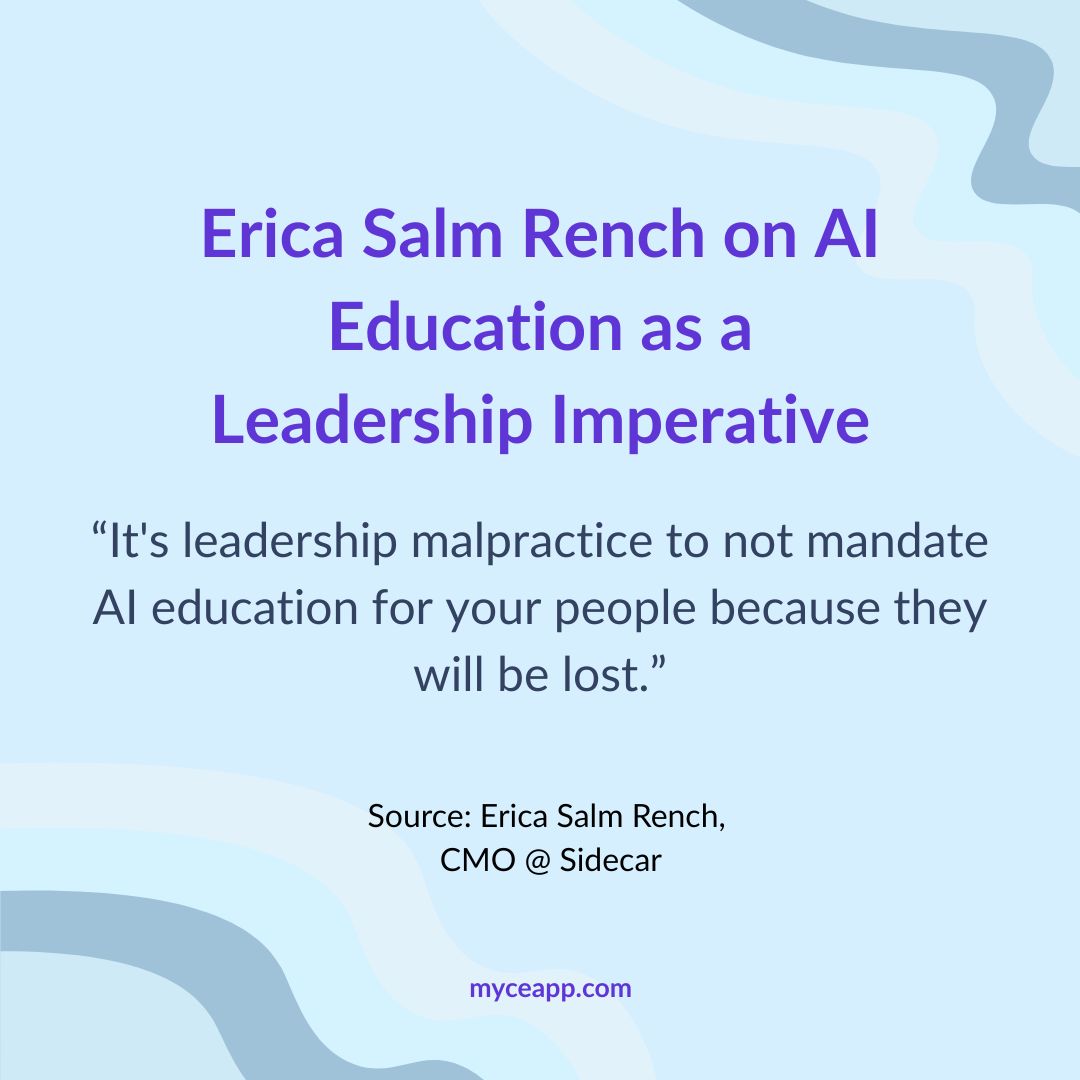
"If the leader at your organization doesn't mandate AI education, whenever you get out of that bubble at your current organization, you're going to be lost when it comes to the next step in your career. We often say it's leadership malpractice to not mandate AI education for your people because they will be lost."
Addressing Fear and Building Psychological Safety
Kyle Kahveci: For a leader with a nervous team or even a leader who is nervous themselves, what is that first conversation that they need to have to start building psychological safety around AI?
Erica acknowledges the reality of fear in the workplace:
"People are scared. If you're hearing everything in the media about this force that's going to potentially take your job one day, there's no not understanding why that's scary to people."
Her approach focuses on demystification and practicality. She encourages leaders to help team members take an inventory of their time and identify where they spend hours on tedious, rote tasks.
"Those are going to be the things that AI can really help with. If you approach it from a standpoint of looking at rote tasks, like the tedious filing that you have to do for three hours every day, we can figure out a way to have an agent help you with that. That is a little bit more approachable than your whole job will just go away one day."
She emphasizes involving people in the decision-making process: "Once people have a seat at the table, their entire perspective changes. Once I feel like I have control of my own destiny, that makes me operate differently. Involve people in the direction you take when it comes to automation and AI scaling."
Identifying Deeper Opportunities in AI Education
Kyle Kahveci: Tell me a little bit about how Sidecar creates resources and the strategy behind the AI certification.
Building a Learning Ecosystem
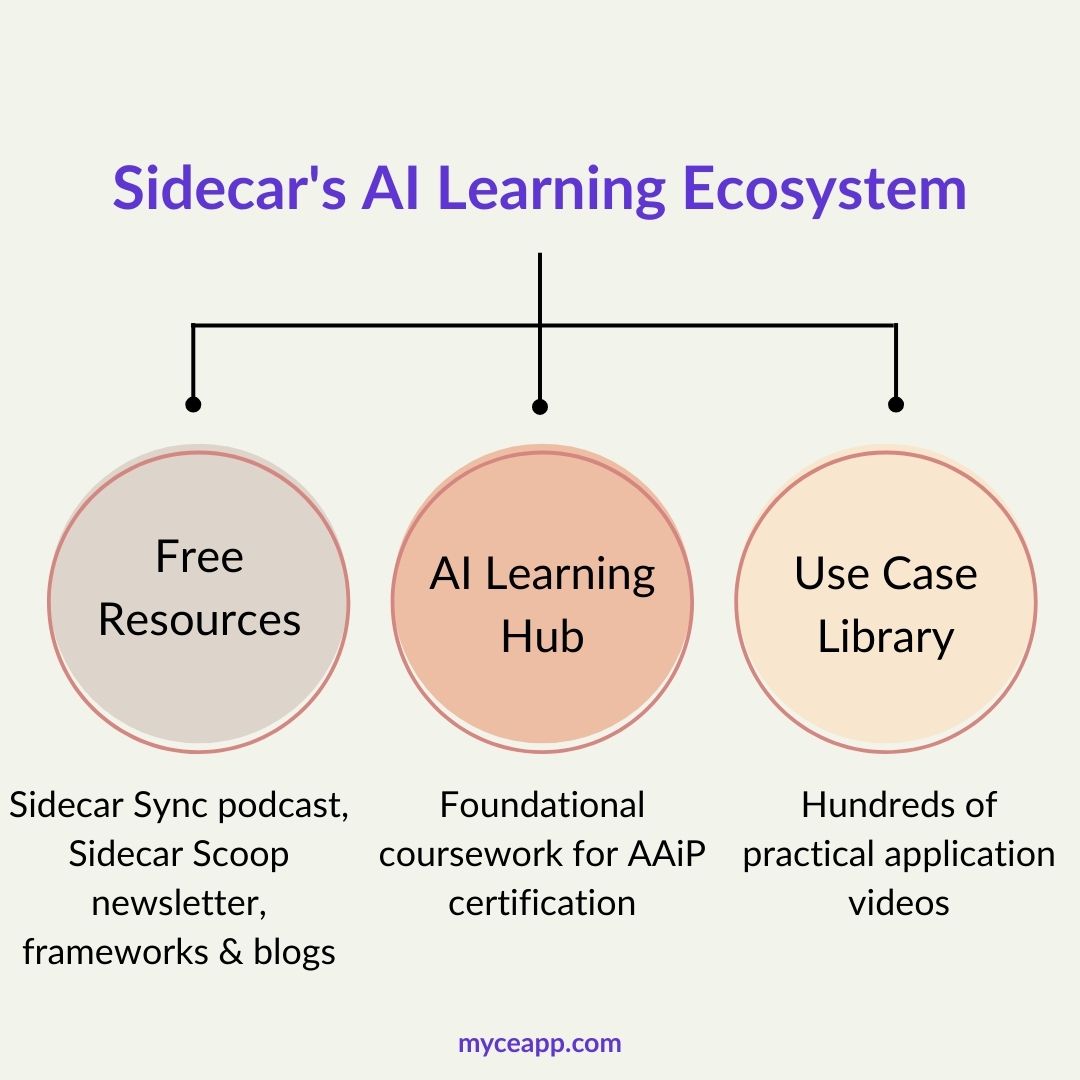
Sidecar has developed a multi-tiered approach to AI education:
AI Learning Hub: The core offering containing coursework for the AAiP (Association AI Professional) certification.
Use Case Library: Hundreds of videos showing practical applications for conference planning, community management, and financial processes.
"We hear from so many folks that they're ready to get started on their AI journey, but they don't quite know where to start. Education is a great place to get started before you create your AI roadmap or your strategic AI plan or you go start building agents. You first need to learn what agents are and learn about the applicability of all of these tools."
Maintaining Relevance Through Continuous Learning
The AAiP certification includes ongoing education requirements to keep pace with rapid change:
"Beyond foundational coursework, it is a continuing program where we continue to put out new content to keep people up to date on what's changing. If you pay attention to this stuff at all, you know it changes literally every single day."
Sidecar has even developed AI technology to update course content quickly as tools evolve, allowing them to easily adjust language when new versions of AI platforms are released.
Building a Movement Around AI Education
Kyle Kahveci: It seems like you're not just creating a certification, you're building almost a movement around it.
Erica confirms this intentional approach:
"If someone can share that I have this AAiP certification, then they're that much more employable and it's a signal to future employers and their own organization that they're committed to lifelong learning and staying on top of this stuff. When people get certified, we encourage them to put that in their LinkedIn profile and post about it."
The goal is to make AI education feel accessible and shareable: "We want everyone to feel like this is something that I can be a part of too. I don't need to be left behind, and it's approachable, and then also something fun to share."
Analyzing Industry Trends: Lessons from Early AI Adoption
Kyle Kahveci: You have a pretty unique perspective coming from rasa.io, really selling this AI concept before the market was ready. What did that experience teach you about communicating around change?
Selling AI Before the Market Was Ready
Erica shares a revealing lesson from her early days at rasa.io:
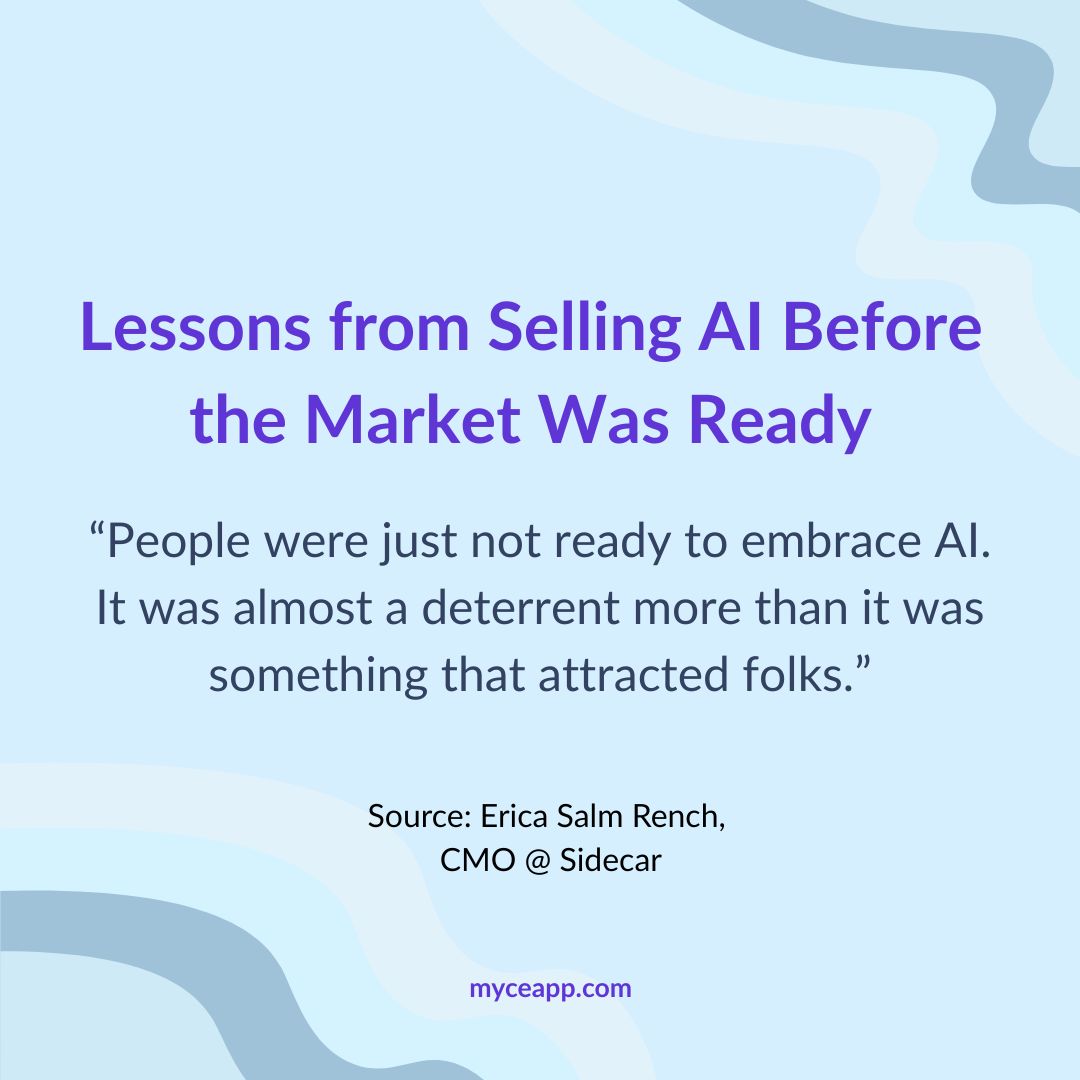
"When we did initially go to market with AI for email and personalized AI-powered email newsletters, we quickly found out that people were just not ready to embrace AI. It not only was something they just didn't understand yet, it was almost a deterrent more than it was something that attracted folks."
The company scaled back its use of AI terminology in marketing for years, using terms like machine learning, behavior recognition, and pattern recognition instead. They eventually brought back the AI language once it became something people found exciting rather than intimidating.
"When you met with folks, it was such a black box and so mystified that it was something people couldn't really get beyond. Even though at that point AI was already built into our phones and all of the devices we interact with on a day to day in our homes, people just weren't ready to let it in knowingly."
The Opportunity to Become the AI Expert
Erica sees a significant career opportunity for those willing to embrace AI:
"There's just such a huge opportunity to be the AI expert at your organization. Beyond foundational education, if you decide to be the one that is always up to date on the latest news and technology and tooling, you're going to propel your career forward. People are going to look to you for advice. That is really powerful for your own personal professional journey."
A Practical Playbook for AI Implementation
Kyle Kahveci: Let's say I'm a leader, I'm totally on board. What are some low-cost AI quick wins that associations can get into in the next 30 days or so?
Quick Wins Over Boiling the Ocean
Erica emphasizes starting small rather than attempting comprehensive transformation:
"A lot of times people think AI journey and they think we need to boil the ocean and every single technology system of ours needs to be AI first, AI enabled. The reality is that if that's the path you go down, you're going to be completely stifled because it's going to be overwhelming."
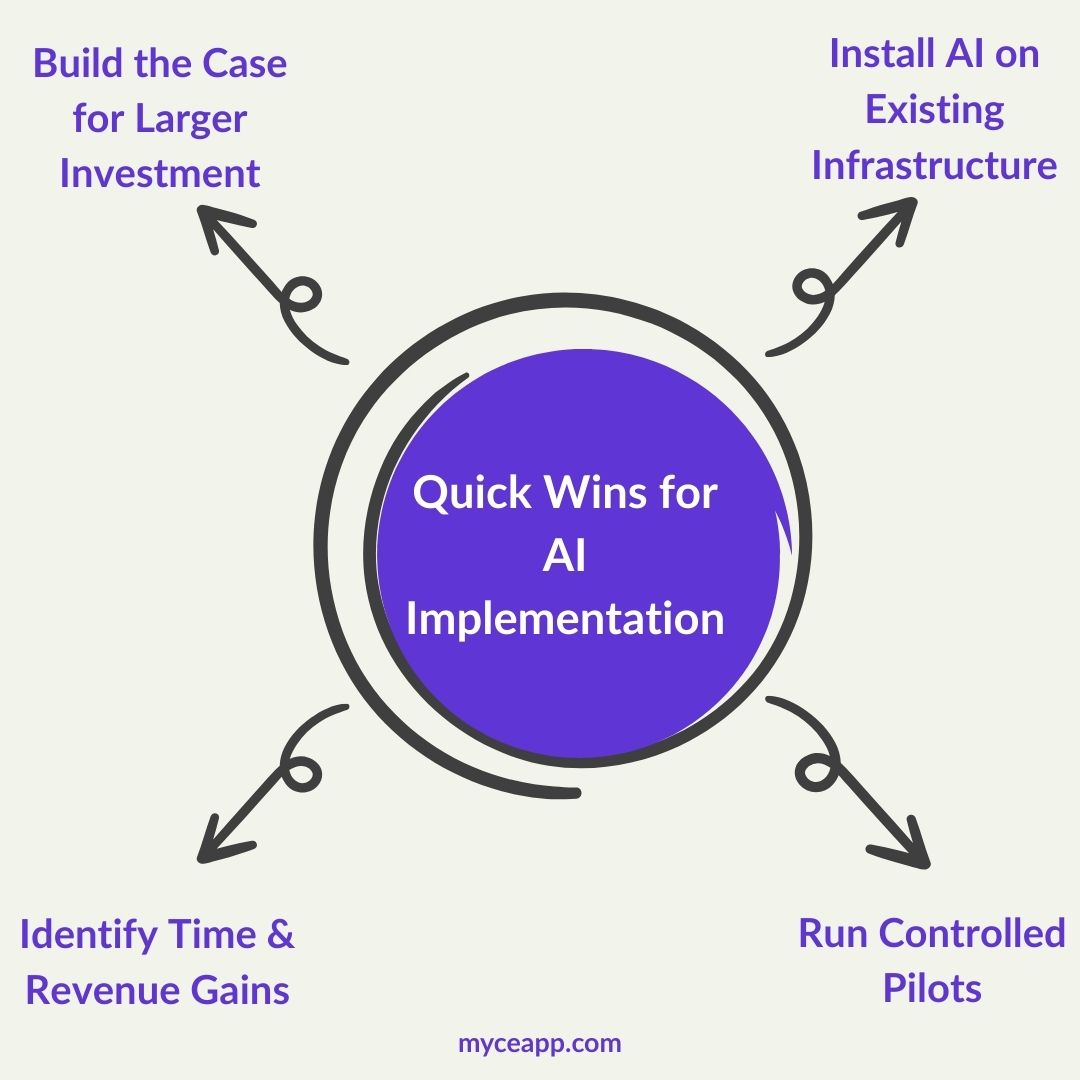
She advocates for AI pilots and controlled experimentation:
Install AI tools on existing infrastructure without full systems overhauls
Prove quick wins through controlled experiments
Identify time efficiencies and revenue opportunities
Build a case for larger investments through demonstrated success
“Think about what you can monetize in your various assets that you didn't approach before. Putting together a webinar, new web and landing pages, different graphics or social media pushes, that took so much more time than before. Now that stuff can be whipped up in a matter of minutes.”
The strategy is to build momentum:
"When it does come time to choose a new database system, you can say, well, this particular system is fully AI-enabled and look at all these other wins we've had. It's a much better case to make to your board."
Personalization at Scale
Kyle Kahveci: How can AI practically help a very small team with limited resources create more one-on-one member experiences?
"Thad Lurie from American Geophysical Union did an AI project where he ingested every single abstract across everything that his members have ever submitted and ingested all of the member data. He was able to connect members with each other based on very niche areas of research."
The result was powerful: researchers studying specific topics could be connected with peers around the world they had never heard of, dramatically enhancing engagement. The same approach was used to match conference attendees in thoughtful ways.
The Future of AI-Powered Work
Kyle Kahveci: How does a professional development director or association executive's day look fundamentally different in 2027 or 2028?
From Executing Tasks to Supervising Agents
Erica describes a future of sophisticated personalization and agent-to-agent coordination:
"Think about a future where our entire ecosystem of content is sent to the right person via the right medium at the right time. The AI will know that a particular piece of content would be the right thing to send to Kyle via email on November 12th. There's going to be so much more sophistication and personalization at a deeper scale."
The shift is from doing work to supervising work:
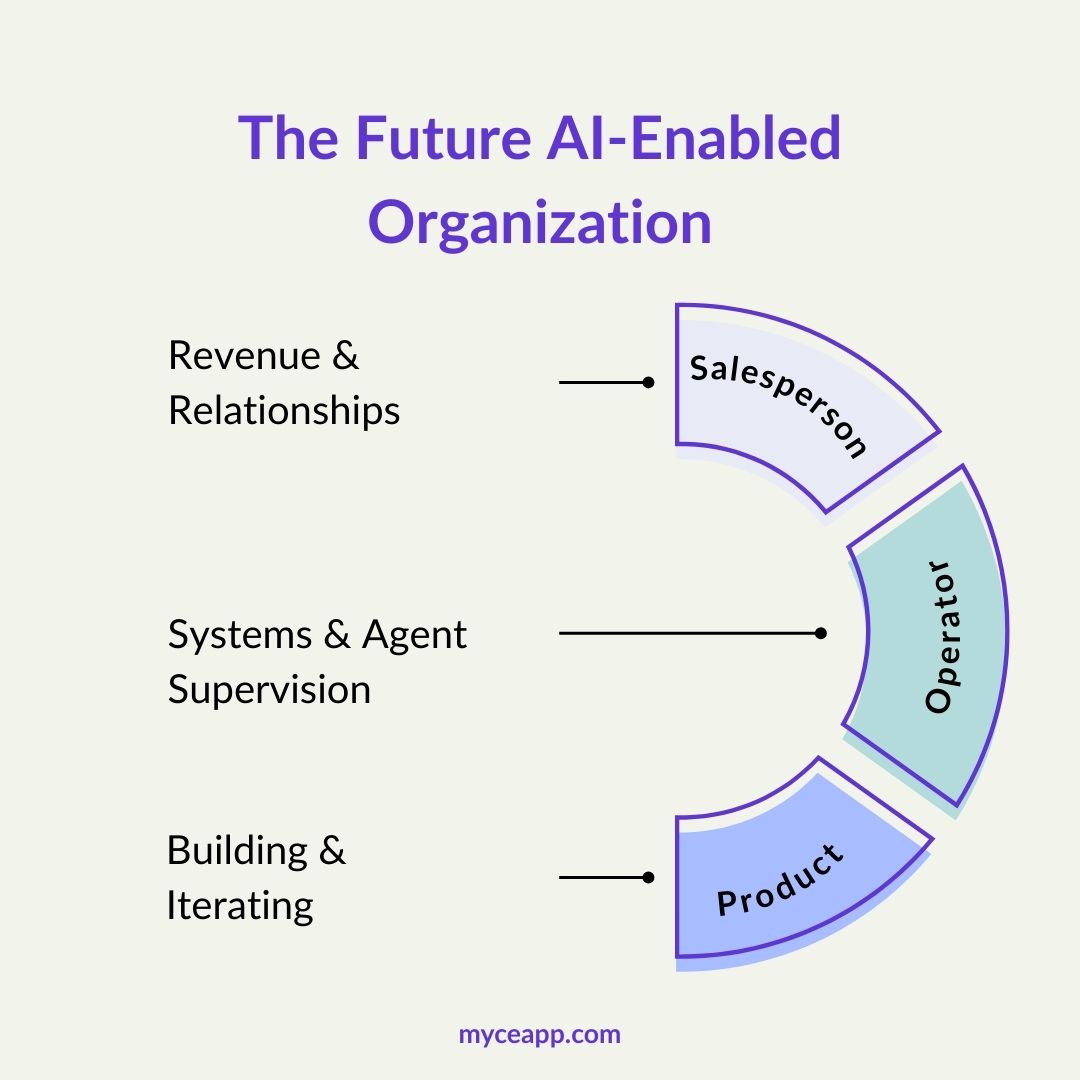
"That's going to all happen with me supervising an agent as opposed to doing all the work myself. And then these agents are going to interact with each other. The marketing agent is going to be able to talk to the sales agent and understand if maybe Kyle's already a lead in our system and we don't need to send him nurture content."
The Evolution of Professional Roles
The conversation explored how roles might transform:
"The future highly AI-enabled organizations might just have three roles: the salesperson, the operator, and the product person. And they're all just kind of supervising a world of agents."
Erica sees value in becoming what she calls a "hyper-powered generalist":
"There's also a case to be made for this really hyper-powered generalist, just so that you can understand systems and have a deep systems intelligence so you can understand how all the functions in an organization work together because of the way the world's moving."
She also predicts a renewed demand for human skills: "There will be a renewed sense of demand for in-person experiences."
Closing Remarks
Taking the First Step
Kyle Kahveci: What is one tangible thing that someone should do today to start building their personal and their team's AI playbook?
Erica offers practical advice for getting started:
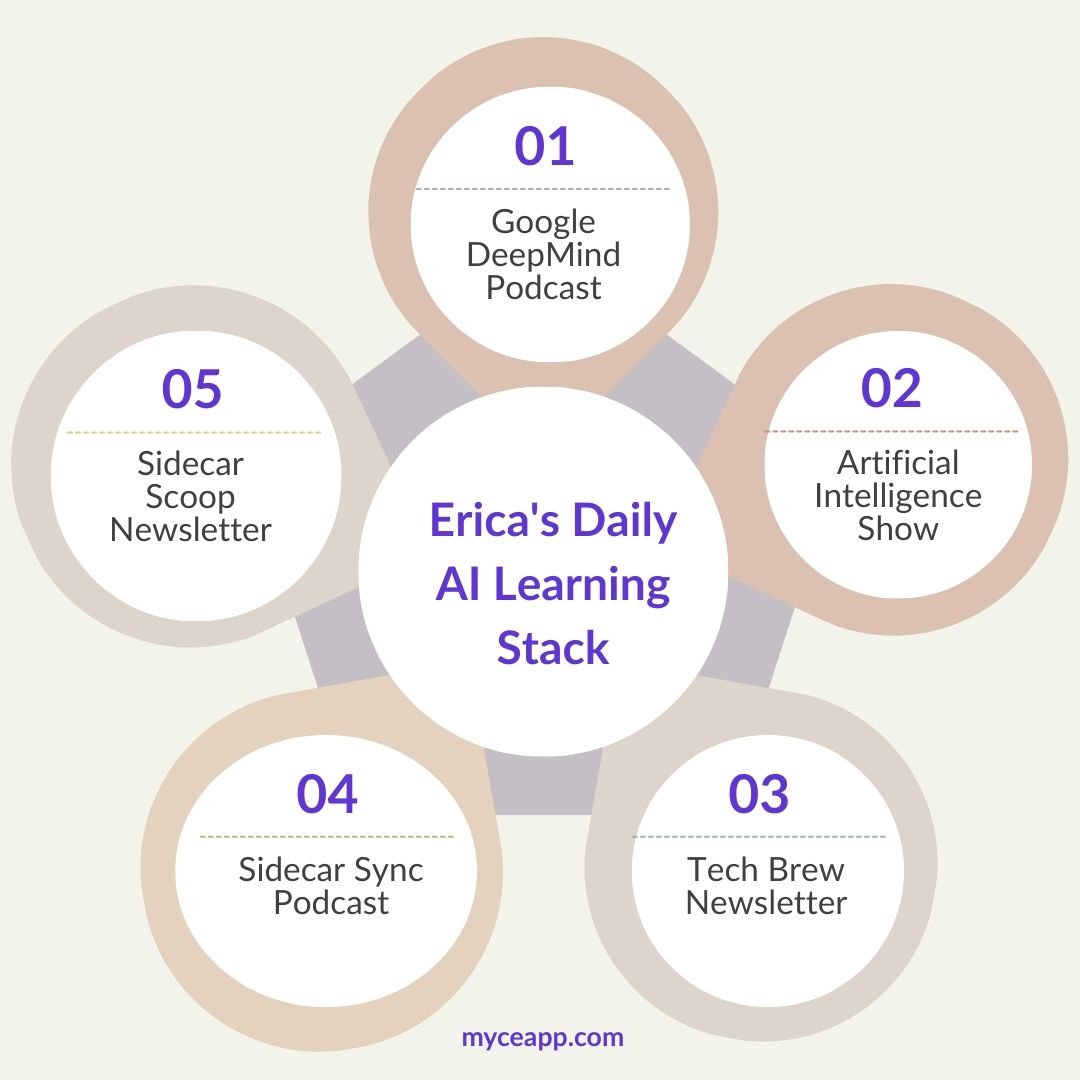
"Spend 15 minutes a day, and you'll be ahead of most people. I listen to the Google DeepMind podcast, the Artificial Intelligence Show put on by the folks at the Marketing AI Institute. Tech Brew is a really good offshoot of the Morning Brew newsletter. And for folks interested in exploring the intersection of AI and associations, Sidecar’s pod and newsletter are great places to start."
Beyond consuming content, she emphasizes hands-on experimentation:
"Once you have somewhat of a foundational understanding and you figured out a path for continued learning, also spend your time just experimenting and playing with the tools. A lot of the value that I bring organizations is I can say based on hands-on experience of my own: this tool is great, this one needs a little work, this one's just in its infancy. That firsthand knowledge becomes incredibly valuable."
The Blue Cypress Approach to Identifying Needs
Erica explained how the Blue Cypress family of companies identifies and meets association needs:
"Across the portfolio of companies, we have hundreds and hundreds of association clients. That allows us to keep a pulse on the evolving needs of the industry because we hear things from all angles. It's not like we're just AI education. We have SaaS solutions, consultancies, services companies. We listen, we do a lot of testing, and we do a ton of experimentation. Once things seem to really have product market fit, we bring them to market."
The Critical Role of Support Systems
As associations scale their AI education initiatives, the importance of robust support systems becomes evident. From managing certification programs to tracking ongoing learning requirements, the administrative complexity can overwhelm organizations. This is where specialized solutions like CE App become essential, enabling association teams to focus on what matters most: preparing their members for an AI-powered future.
Resources and Next Steps
For Association Professionals
Explore Sidecar's Resources: Visit Sidecar to access the AI Learning Hub and AAiP certification program.
Managing AI education programs and certification requirements demands sophisticated tools. CE App offers comprehensive solutions designed explicitly for associations, including:
Disclaimer: This post contains a modified transcript and is not a verbatim representation of the speakers' words. It is intended to capture the essence of the ideas discussed. For the complete context, please refer to the original interview. The views and opinions expressed in this interview are those of the speaker and do not necessarily reflect our organization's official policy or position.
Frequently Asked Questions
Need help? Start here for fast solutions.
According to Erica, failing to mandate AI education for teams is “leadership malpractice” because employees focused on day-to-day work become isolated from broader industry changes. Without AI literacy, team members will be lost when they move to their next position or when AI transforms their current role.
The Association AI Professional (AAiP) certification is Sidecar's foundational AI education program. It provides coursework on AI fundamentals and requires ongoing learning through core courses released every six months to maintain certification, reflecting the fast-changing nature of AI technology.
Leaders should start with education and demystification. Erica recommends having team members inventory their time to identify tedious, repetitive tasks where AI can help. Approaching AI as a tool to eliminate tedious work rather than replace jobs makes adoption more approachable. Involving team members in decision-making also shifts their perspective.
Rather than comprehensive systems overhauls, Erica recommends AI pilots and controlled experiments. Examples include using AI to create marketing assets faster, installing AI tools on existing websites, and automating content creation for webinars, landing pages, and social media. Building momentum through small wins creates a stronger case for larger investments.
AI can analyze member data and content to create connections that would be impossible to make manually. One example involved ingesting member abstracts and data to connect researchers studying similar niche topics across the globe, dramatically enhancing engagement by introducing members to peers they never knew existed.
Erica envisions a shift from executing tasks to supervising AI agents. Marketing, sales, and other agents will interact with each other to coordinate personalized outreach. Professionals may become "hyper-powered generalists” with deep systems intelligence, understanding how all organizational functions work together.
Erica recommends spending 15 minutes a day on AI education. Her recommended resources include the Google DeepMind podcast, the Artificial Intelligence Show from Marketing AI Institute, the Tech Brew newsletter, the Sidecar Sync podcast and the Sidecar Scoop newsletter. She also emphasizes the importance of hands-on experimentation with AI tools.
When rasa.io initially marketed AI-powered email, the term AI was a deterrent rather than an attraction. The company scaled back AI terminology for years, using terms like machine learning and pattern recognition instead. This experience taught that demystifying technology and meeting people where they are is essential for adoption.
Blue Cypress maintains hundreds of association clients across multiple companies, including SaaS solutions, consultancies, and services firms. This breadth allows them to hear feedback from all angles, test extensively, and bring solutions to market once they demonstrate product-market fit.
Erica sees a significant opportunity for individuals to become the AI expert at their organization. Those who stay current on news, technology, and tooling will propel their careers forward as colleagues look to them for advice. Building hands-on experience with tools creates valuable firsthand knowledge.
Learn more about the CE App
See how your organization can use CE App to increase revenue and improve continuing education compliance.