What Happens When Clinician Certifications Expire? Compliance Risks, Patient Safety & Penalties
When a single clinician’s certification or license lapses, the organization that employs them can inherit the consequences: compliance gaps, state board action, federal exclusion penalties, and unpaid Medicare claims.
Every hospital leader knows the scramble when a Joint Commission survey is on the calendar. The quieter risk is closer to home and seldom gets the attention it deserves:
One clinician’s license or certification lapses, and the organization that employs them inherits the consequences.
Expired healthcare certifications can lead to compliance violations, patient safety risks, credentialing disruptions, financial penalties, and several more adverse consequences for both the individual practitioner and the organization that employs them. Unfortunately, healthcare organizations often discover certification gaps only during audits, renewals, or regulatory reviews, when remediation is most costly.
As healthcare organizations grow across specialties, locations, and licensingjurisdictions, keeping certifications current becomes increasingly complex. Whether it’s a nursing license, physician certification, or specialty credentials, a missed renewal can have consequences that extend far beyond the individual clinician.
Given that, here is a breakdown of what happens when a clinician’s certification expires, and how organizations can avoid the most common failure modes.
CE Snapshot
The Risk: When an individual clinician’s certification expires, the employing organization can face compliance gaps, credentialing disruptions, staffing challenges, and financial or regulatory consequences.
Why It Happens: Missed renewal deadlines, incomplete CE/CME requirements, manual tracking, and complex state-specific requirements all contribute to certification lapses.
Patient Safety Matters: An expired certification does not automatically mean a clinician is unsafe, but lapses can indicate gaps in the processes used to maintain current qualifications and competency, which directly impacts patient safety.
How to Prevent It: Centralized certification tracking, automated renewal reminders, ongoing CE/CME monitoring, and routine compliance reviews can help organizations identify and address risks before certifications expire.
The Bigger Picture: Proactive clinician certification management helps healthcare organizations maintain workforce readiness, strengthen audit readiness, and support ongoing compliance.
What Happens When a Clinician’s Certification Expires?
An expired certification can create compliancegaps,credentialingissues,andrestrictionsona clinician’s ability to practice or work in certain roles, depending on applicable requirements. The organization that employs them can face staffing, regulatory, and financial consequences, even when the lapse was the clinician’s own.
What Are Healthcare Certifications?
Healthcare certifications validate a clinician’s orprofessional’s qualifications,competency, and ability to meet regulatory and industry standards. They help ensure quality care, regulatory compliance, and patient safety across various healthcare settings.
The term also covers organization-level credentials, such as a hospital’s state license or its accreditation from a body like The Joint Commission. Those get plenty of attention.
This piece focuses on the individual level: the licenses and certifications each clinician holds, and what happens to the organization when one of them lapses.
Healthcare workers frequently have to keep up several credentials at once. Depending on their role and circumstances, these requirements could consist of:
Professional licenses
Board certifications
Specialty certifications
Continuing education (CE) requirements
Continuing medical education (CME) requirements
Hospital privileges
State-specific training mandates
Credentialing and accreditation requirements
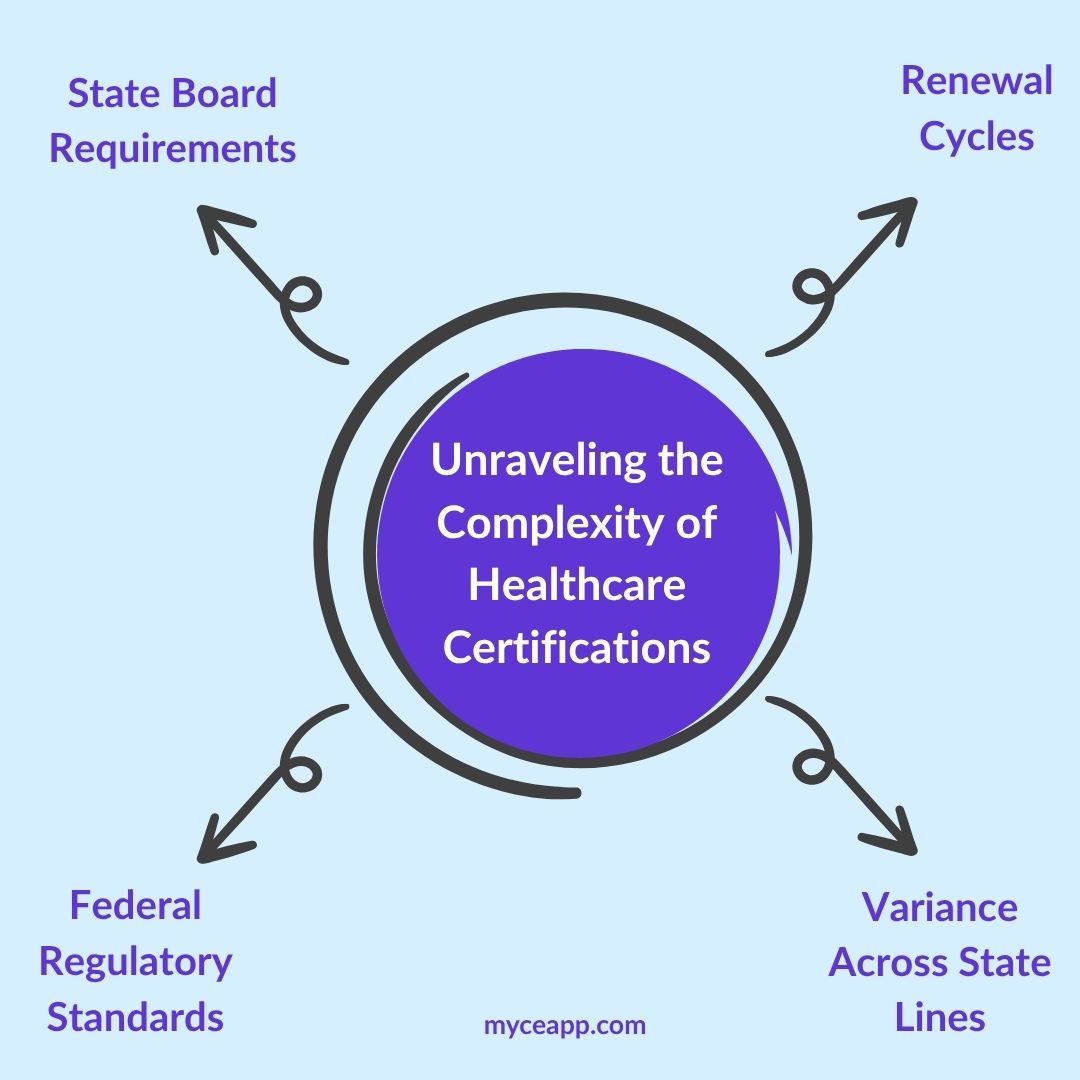
Unraveling the Complexity of Healthcare Certifications
Several factors make these obligations considerably complex:
Renewal Cycles: Most of these credentials operate on different renewal cycles. Some renew annually, others every two or three years, and some require ongoing documentation throughout the cycle.
Variance Across State Lines: Continuing education and licensure renewal requirements also vary significantly across states. The Federation of State Medical Boards (FSMB) publishes state-specific CME requirements showing differences in required credit hours, renewal cycles, and mandatory training topics.[1]
Federal Regulatory Standards: The Centers for Medicare & Medicaid Services (CMS) also requires healthcare organizations participating in Medicare and Medicaid programs to comply with Conditions of Participation (CoPs), which establish federal health and safety standards. For hospitals, these include an organized medical staff that examines the credentials of every candidate for membership (42 CFR 482.22) and a governing body responsible for appointments and for the credentialing and privileging process (42 CFR 482.12).[2]
State Board Requirements: Similarly, state medical boards establish licensure renewal requirements, and many states require physicians to complete continuing medical education (CME) as part of the renewal process. The American Medical Association’s Ed Hub maintains state-by-state pages on CME requirements, paired with courses to help physicians meet them.[3] A physician must hold an active medical license to legally practice medicine.
Healthcare professionals and healthcare organizations must comply with the regulations of the state where they are licensed, along with federal requirements and accreditation standards. This complexity is precisely why certification tracking becomes increasingly difficult as healthcare organizations grow.
A single clinician may be responsible for maintaining multiple certifications simultaneously, each with different deadlines, documentation requirements, and renewal criteria.
For organizations employing numerous healthcare professionals, this can cascade into a much bigger compliance headache if the right systems are not put in place.
Active Certifications vs. Expired Certifications
At a glance, here are the key differences between active certifications and expired certifications:
Active Certifications
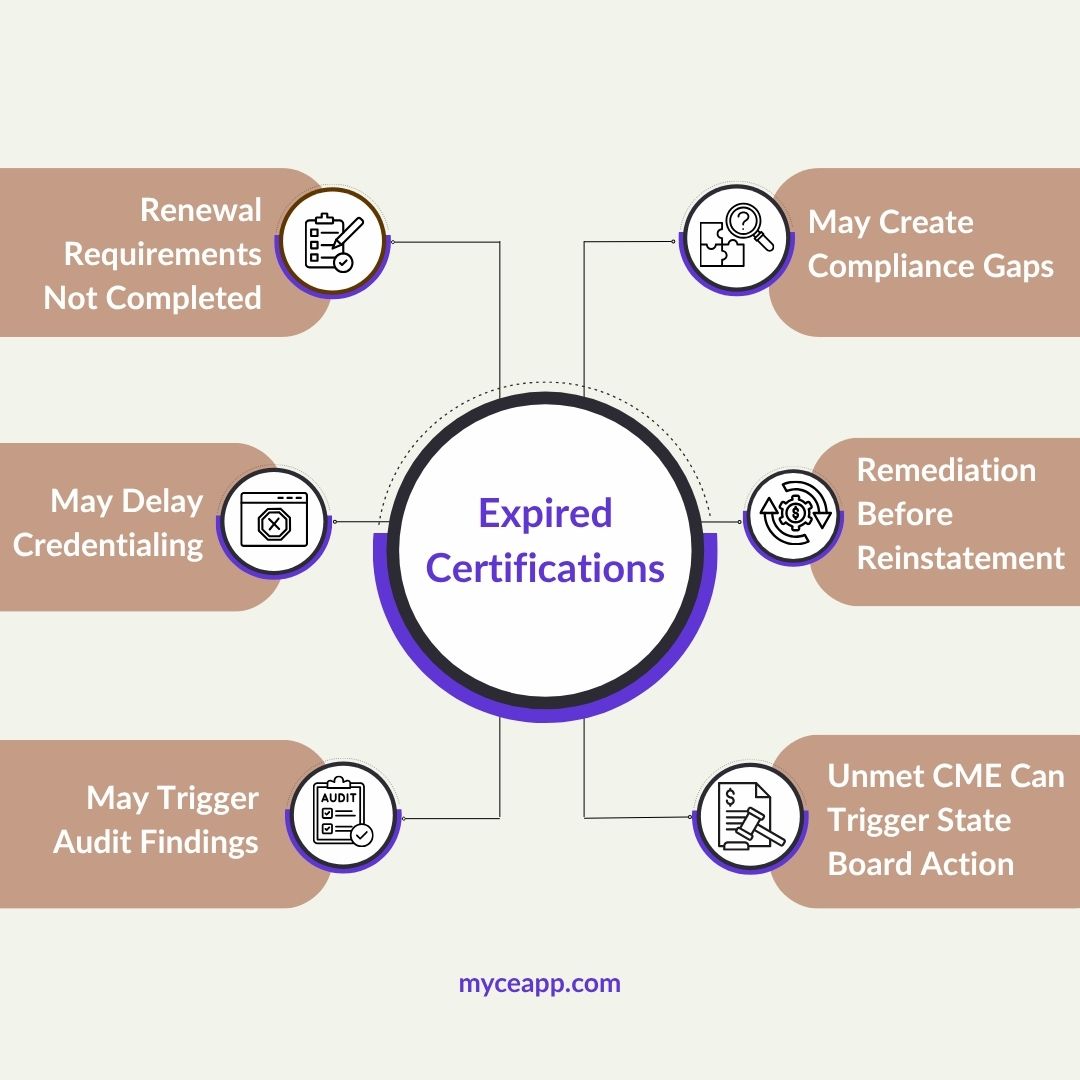
Expired Certifications
Meets Current Renewal Requirements
Renewal Requirements Not Completed
Supports Compliance Readiness
May Create Compliance Gaps
Helps Maintain Credentialing Eligibility
May Delay Credentialing or Re-Credentialing
Demonstrates Ongoing Professional Maintenance
May Require Remediation Before Reinstatement
Improves Audit Preparedness
May Trigger Audit Findings or Corrective Actions
Keeps the License in Good Standing
Unmet CME Requirements Can Trigger State Board Action
Healthcare compliance depends on maintaining current credentials across the workforce. When certifications expire, organizations may find themselves out of alignment with regulatory, accreditation, and licensing requirements. These problems amplify as the organization scales.
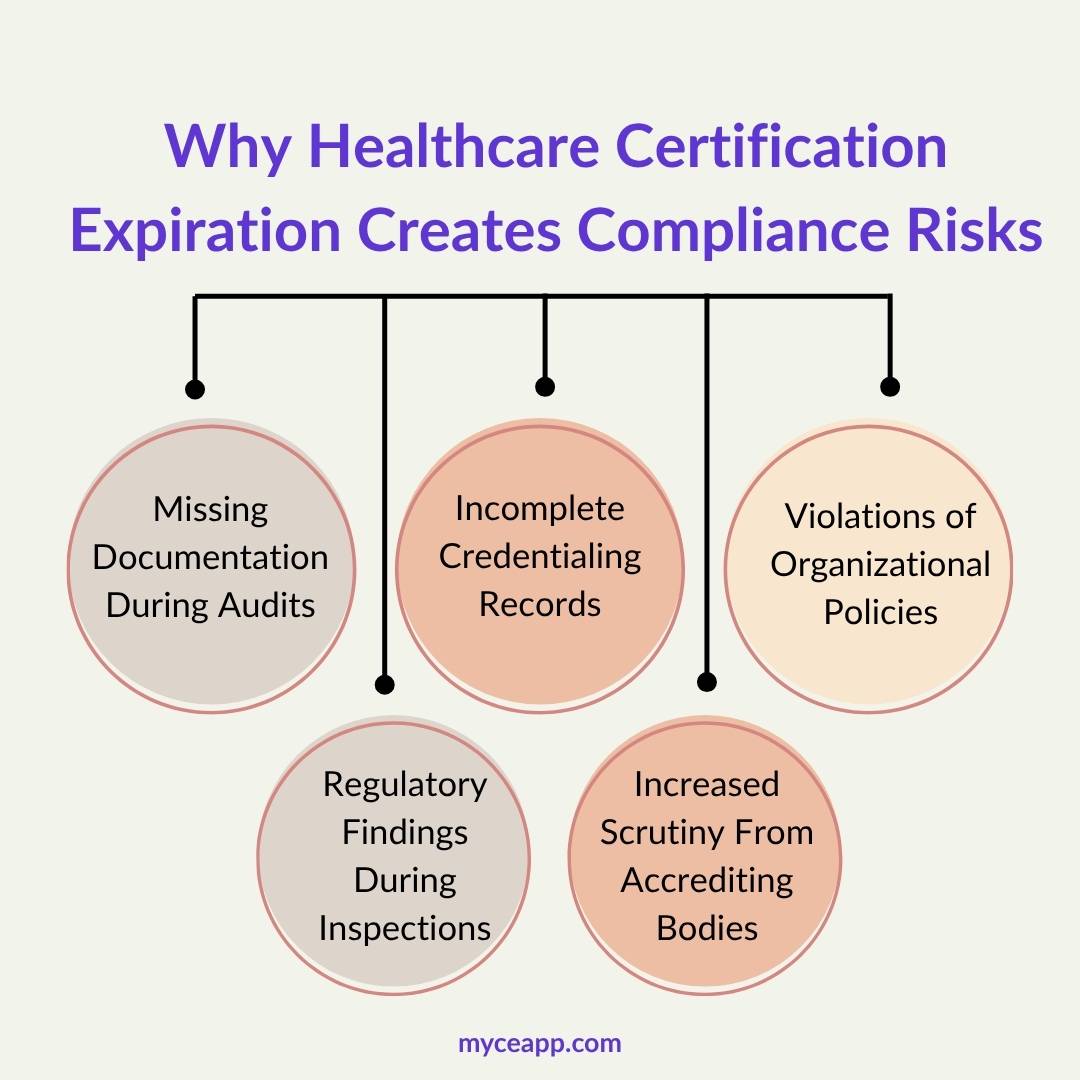
An expired certification can create several compliance concerns:
Missing documentation during audits
Incomplete credentialing records
Violations of organizational policies
Regulatory findings during inspections
Increased scrutiny from accrediting bodies and state boards
Healthcare organizations often find that tracking systems (spreadsheets, internal documents, etc.) that worked well for a smaller workforce become increasingly difficult to manage as the number of clinicians, certifications, and renewal cycles grows.
A key challenge then becomes that compliance gaps often remain hidden until an audit, credentialing review, or license renewal process reveals them. By that stage, remediation may require substantial administrative effort, documentation gathering, and corrective action planning.
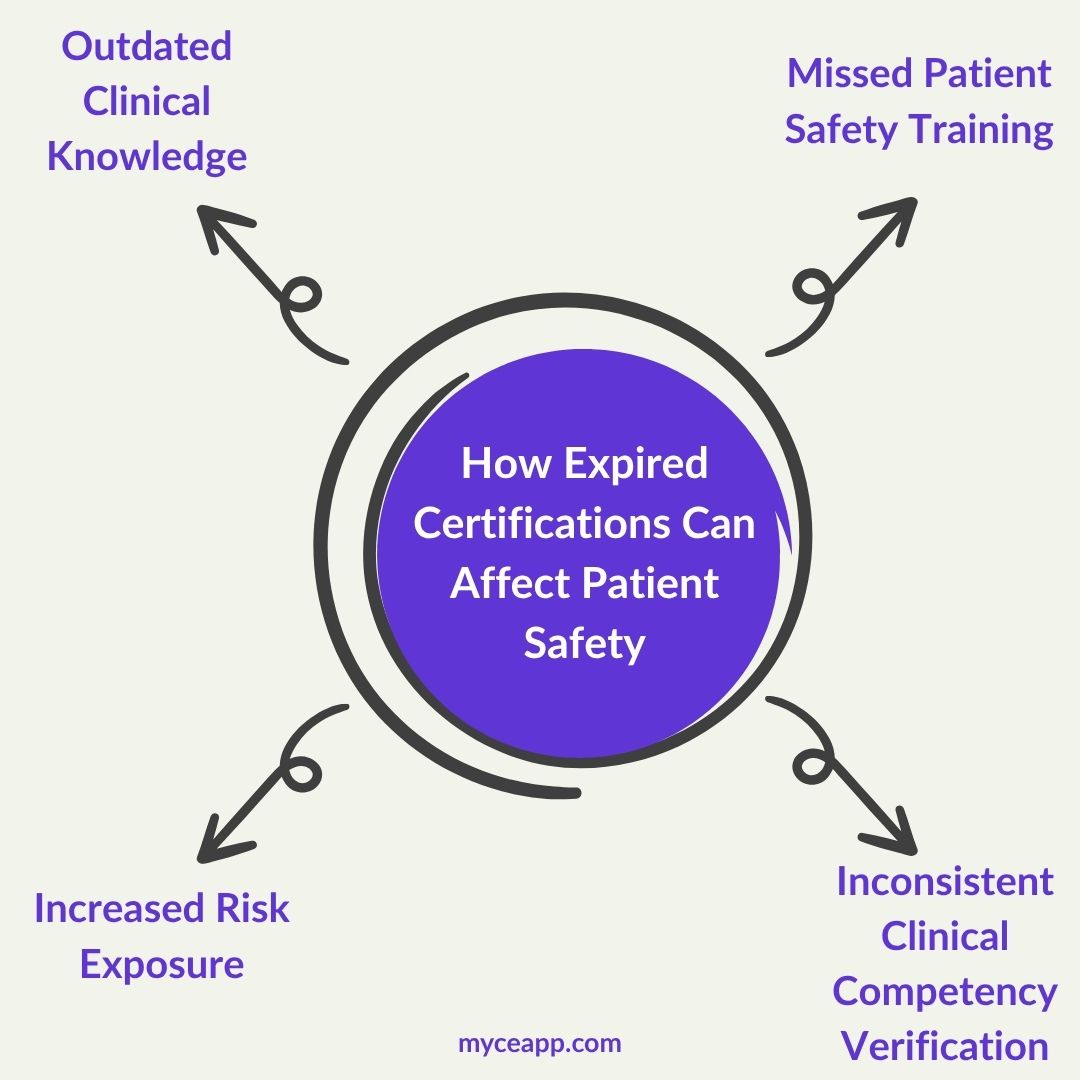
How Expired Certifications Can Affect Patient Safety
Certification requirements help ensure healthcare professionals remain current with evolving standards of care, clinical practices, and regulatory expectations. Continuing education (CE) and continuing medical education (CME) requirements support ongoing professional competence by acting as the medium through which healthcare professionals stay abreast of the latest developments and industry best practices, ensuring patient safety.
An American College of Chest Physicians guideline panel, drawing on a Johns Hopkins evidence review for the Agency for Healthcare Research and Quality (AHRQ), concluded in the journal Chest that continuing medical education improves physicians’ application of knowledge, and recommended multiple exposures and longer durations.[4] A 2015 synthesis of eight systematic reviews reported that CME improves physician performance and patient health outcomes, more reliably for performance, and that more interactive, multi-exposure, longer activities lead to better outcomes.[5]
So, when these certifications unduly expire or lapse, valid questions are raised regarding the workforce’s competencies. Key concerns regarding patient safety include:
Outdated Clinical Knowledge: Medicine evolves rapidly–new treatments, technologies, safety protocols, and regulatory requirements emerge constantly. Continuing education helps clinicians stay informed about these changes and apply current best practices in patient care.
Missed Patient Safety Training: AHRQ’s Patient Safety Network (PSNet) notes that patient safety education still needs strengthening from undergraduate training through continuing education and practice, with common curriculum topics such as human error, teamwork, and infection prevention. When renewal-cycle education lapses, clinicians lose a recurring touchpoint for these practices.[6]
Inconsistent Clinical Competency Verification: Certification management helps organizations verify that clinicians remain qualified and up to date with required education and competency standards. Certification lapses can weaken this verification process, making it harder to consistently demonstrate workforce readiness for patient care.
Increased Risk Exposure: An expired certification does not automatically mean a clinician or workforce is unsafe, but it may signal gaps in the processes that support continuous competency and high-quality patient care.
Beyond patient safety, lapses also carry regulatory and financial consequences.
Financial and Regulatory Penalties Organizations May Face
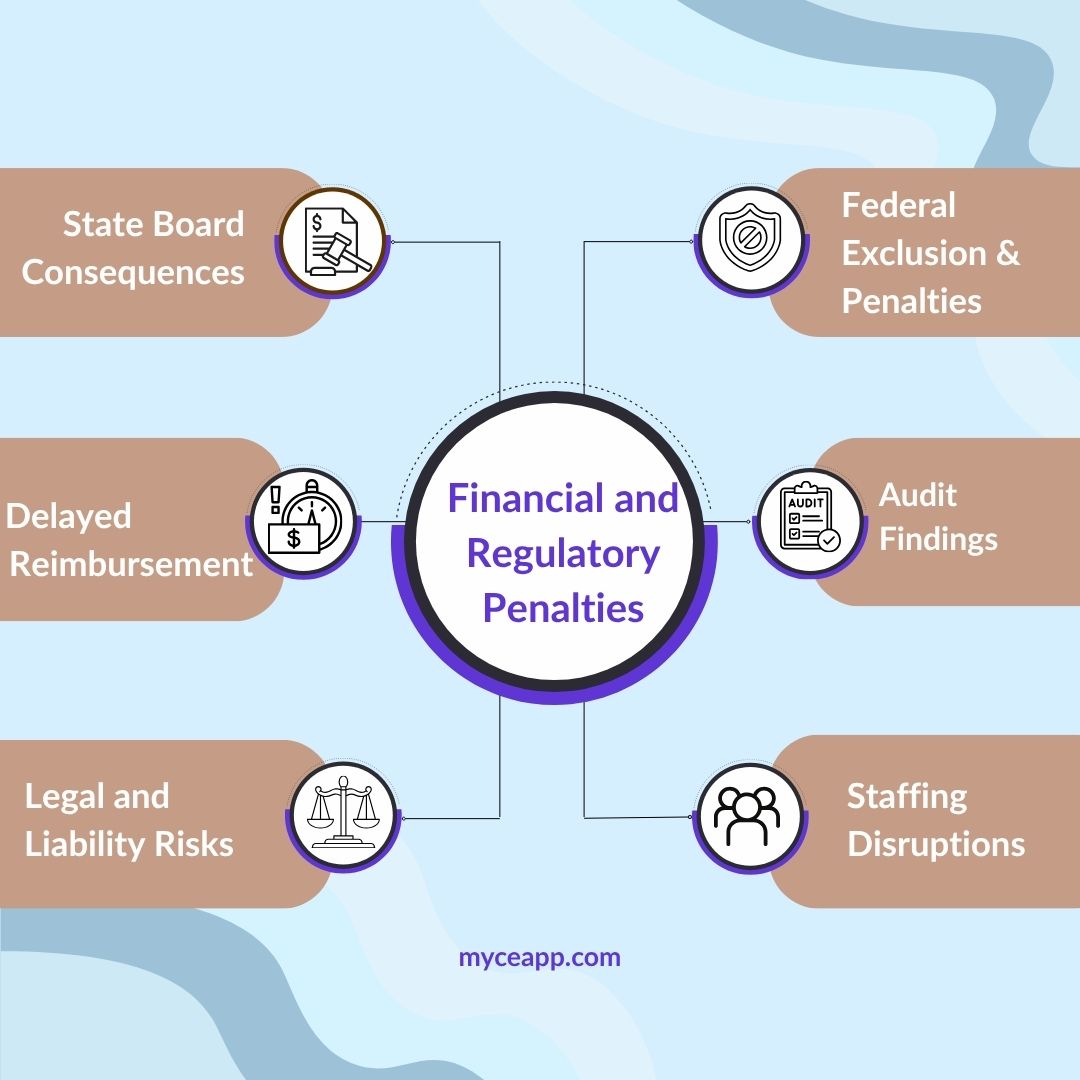
The financial consequences of certification expiration often extend far beyond renewal fees, and several fall on the organization even when the lapse is an individual clinician’s. Depending on the profession, credential, and jurisdiction, organizations may face:
State Board Consequences: The Federation of State Medical Boards lists failing to meet CME requirements as an example of unprofessional conduct under state Medical Practice Acts. Board actions range from a required CME course to license suspension or revocation, and even late renewal can prompt a board order. Boards report disciplinary actions to FSMB, whose Disciplinary Alert Service notifies the physician’s other state boards within 24 hours.[7]
Federal Exclusion and Penalties: When a clinician loses a license, including the right to renew it, for reasons bearing on professional competence, performance, or financial integrity, the U.S. Department of Health and Human Services Office of Inspector General (OIG) can exclude them from Medicare and Medicaid (42 CFR 1001.501).[8] An organization that employs or contracts with an excluded individual faces penalties of up to $25,595 for each item or service that person provides, as adjusted for inflation, plus an assessment of up to three times the amount claimed or the cost of employing them (45 CFR 102.3; 42 CFR 1003.210).[9][10]
Delayed Reimbursement: Medicare billing privileges for physicians and other practitioners start on the later of two dates: when an approved enrollment application was filed, or when services began at a new practice location (42 CFR 424.520(d)). Retrospective billing generally reaches back only 30 days (42 CFR 424.521), so care delivered earlier while enrollment stalls goes unpaid by Medicare.[11]
Audit Findings: Expired certifications can result in negative audit findings that require remediation efforts, documentation reviews, and corrective action plans.
Legal and Liability Risks: If questions arise regarding a provider’s qualifications during a claim, investigation, or legal proceeding, expired credentials can create additional scrutiny and compound the organization’s liability.
Staffing Disruptions: Organizations may need to temporarily remove clinicians from schedules or limit their responsibilities until compliance issues are resolved.
The financial impact of expired certifications is often indirect but significant, particularly when they contribute to credentialing delays, staffing disruptions, reimbursement issues, or reduced provider availability.
Common Reasons Healthcare Certifications Expire
Given that certifications are so crucial, why do lapses keep happening?
Many certification lapses are not intentional. They often happen because healthcare professionals and organizations are mandated to manage multiple deadlines, documentation requirements, and regulatory obligations at once.
Common failure modes include:
Missed renewal deadlines
Incomplete CE or CME requirements
Manual spreadsheet tracking
Multi-state licensing complexity
Staff turnover and administrative changes
Delayed documentation submission
Lack of automated renewal reminders
Limited visibility across departments or locations
In many cases, the administrative burden becomes overwhelming, and internal systems start to break down. These problems compound as the organization grows in size.
Why Certification Tracking Becomes More Difficult as Organizations Grow
As healthcare organizations expand, managingcertificationsbecomessignificantly more complex. What may be manageable for a small clinic quickly becomes challenging for larger provider groups, hospitals, health systems, and multi-site organizations.
Healthcare administrators often need to track hundreds or even thousands of licenses, certifications, CE credits, and training requirements across different professions and jurisdictions. Each credential has its own renewal cycle, documentation requirements, and regulatory standards.
For the organizations it accredits, the Joint Commission requires primary source verification of practitioners’ licenses, certifications, and registrations, and its Standards Interpretation FAQ is explicit that completing the verification is the organization’s responsibility, not the licensed individual’s. The requirements sit in the Human Resources chapter of its accreditation manuals, and presenting a copy of a license, without evidence that the organization completed the verification, does not meet them.[12]
Given the stringent administrative verification thresholds, organizations struggle to identify upcoming expirations, verify documentation, or prepare for audits efficiently, without centralized tracking.
As a result, compliance teams often spend significant time and effort reacting to renewal deadlines instead of managing them proactively. For organizations that are eager to adopt a more proactive approach to clinician certification and tracking, the following best practices serve as a reasonable starting point.
Best Practices for Preventing Certification Expiration
Preventing certification lapses requires more than occasional reminders. Healthcare organizations need a systematic approach that provides visibility into credential status across the workforce and supports proactive renewal management.
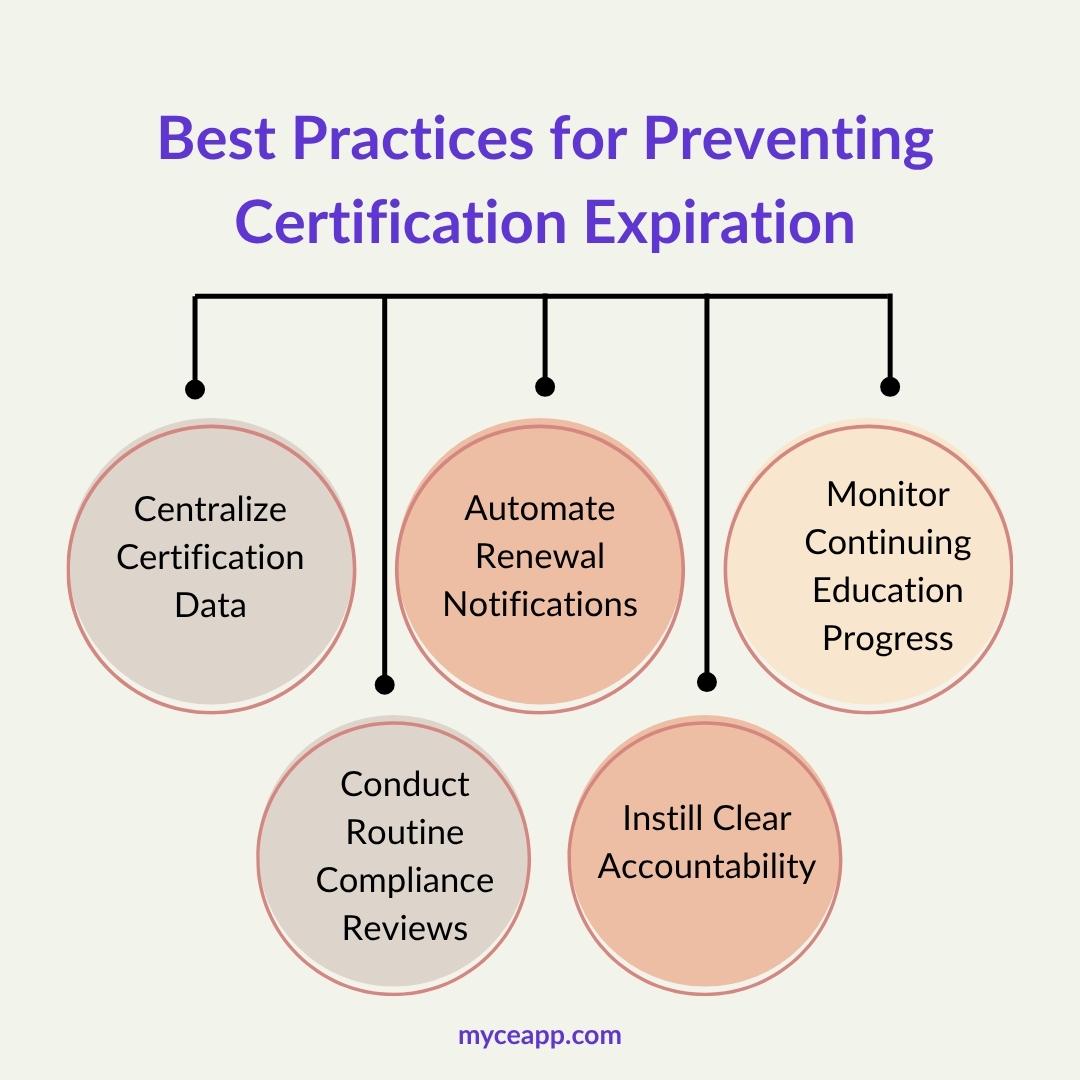
Several best practices can help reduce the risk of expired certifications:
Centralize Certification Data: Maintaining certification records in a unified system helps organizations monitor renewal dates, documentation requirements, and compliance status across departments and locations. Centralized visibility reduces the likelihood of credentials being overlooked.
Automate Renewal Notifications: Manual tracking often relies on calendars, spreadsheets, or individual follow-up. Automated reminders let clinicians and administrators receive advance notice as renewal deadlines approach, facilitating more time to complete education requirements and submit documentation.
Monitor Continuing Education Progress: Lapses often start when clinicians underestimate how long CE or CME takes. Tracking progress through the renewal cycle surfaces gaps while there is still time to act. It supports learning too: the CME research cited earlier favors multiple exposures over time, something last-minute cramming cannot deliver.[4][5] Our guide to the top 10 certification tracking metrics covers the numbers worth watching, from CE completion rate to file completeness.
Conduct Routine Compliance Reviews: Periodic audits of certification records can uncover missing documentation, approaching expiration dates, and inconsistencies that may create issues during external audits or credentialing reviews.
Instill Clear Accountability: Organizations should establish clear ownership for certification management responsibilities. Whether responsibility rests with individual clinicians, managers, credentialing teams, or compliance departments, accountability helps ensure renewals remain a priority.
Organizations that treat certification management as an ongoing compliance process rather than an annual administrative task are generally better positioned to maintain workforce readiness and avoid unexpected credentialing disruptions.
How Technology Helps Simplify Certification Management
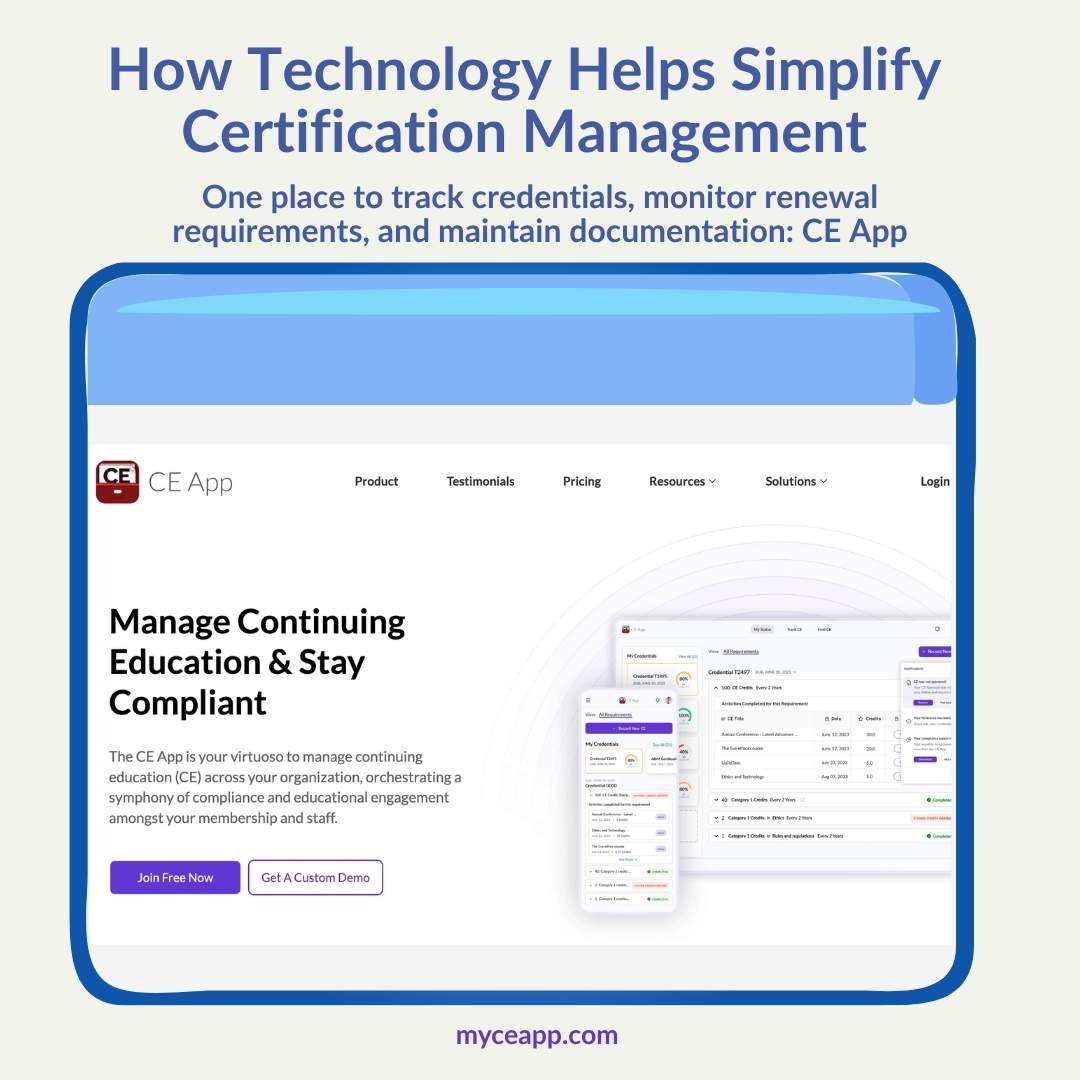
As certification requirements become more complex, many forward-thinking healthcare organizations are turning to digital solutions to reduce administrative burden and improve compliance visibility. Modern certification management platforms like CE App can help organizations:
Track licenses and certifications across professions, with multi-state tracking against each state's requirements
Monitor expiration dates in real time
Store supporting documentation securely
Generate compliance reports for audits
Automate reminders and renewal workflows
Provide visibility across departments and locations
These capabilities become especially valuable for organizations managing large clinical workforces with varying certification requirements and renewal schedules.
Instead of relying on disconnected spreadsheets, manual follow-up, or multiple systems, organizations get one place to track credentials, monitor renewal requirements, and maintain documentation, which frees attention for patient care while keeping high confidence in the compliance process.
Conclusion
Healthcare certifications are more than administrative requirements. They help support regulatory compliance, workforce readiness, professional competence, and patient safety. Organizational accreditation rightly gets the spotlight, but individual lapses are the quieter exposure, and the regulations cited above make clear who carries it.
As organizations scale and certification requirements become increasingly complex, they need proactive systems to reduce risk, improve audit readiness, and maintain compliance across the workforce.
See CE App in Action: Connect today to discover how CE App can help your organization centralize certification tracking, automate renewal reminders, simplify continuing education management, maintain audit-ready documentation, and gain real-time visibility into workforce compliance.
Don’t wait until expired certifications create compliance issues for your organization and your clinical staff. Connect with our team today and build a stronger, more resilient certification management process.
Disclaimer: This article is for general information and is not legal or compliance advice; confirm requirements with your compliance and legal teams.
O’Neil KM, Addrizzo-Harris DJ; American College of Chest Physicians Health and Science Policy Committee. Continuing medical education effect on physician knowledge application and psychomotor skills: effectiveness of continuing medical education: American College of Chest Physicians Evidence-Based Educational Guidelines. Chest. 2009;135(3 Suppl):37S-41S. https://pubmed.ncbi.nlm.nih.gov/19265074/
Cervero RM, Gaines JK. The impact of CME on physician performance and patient health outcomes: an updated synthesis of systematic reviews. J Contin Educ Health Prof. 2015;35(2):131-138. https://pubmed.ncbi.nlm.nih.gov/26115113/
An expired certification may create compliance gaps, delay credentialing, trigger audit findings, and require corrective action before the credential can be reinstated. Many of those consequences fall on the organization that employs the clinician, not only on the clinician.
Certification requirements are designed to support ongoing professional competence and regulatory compliance. A lapse does not automatically mean a clinician is unsafe, but it may indicate a breakdown in the processes used to maintain current qualifications.
Digital certification management platforms can help organizations track expiration dates, store documentation, automate reminders, generate audit reports, and improve visibility across departments and locations.
Organizations can reduce risk by centralizing credential records, automating renewal reminders, monitoring CE/CME progress, conducting routine compliance reviews, and establishing clear accountability for renewals.
Large organizations often manage hundreds or thousands of licenses, certifications, and training requirements across multiple professions, locations, and regulatory jurisdictions, each with different renewal cycles and documentation rules.
It can. Failing to meet CME requirements is among the examples of unprofessional conduct under state Medical Practice Acts. When a board takes disciplinary action, the Federation of State Medical Boards’ Disciplinary Alert Service notifies the physician’s other state boards within 24 hours, and each can act on it. CE App’s multi-state tracking checks each license against its own state’s requirements, so a lapse can surface before it becomes a board matter.
Learn more about the CE App
See how your organization can use CE App to increase revenue and improve continuing education compliance.