Government Shutdown: The Closing Compliance Window
The longest government shutdown in U.S. history has created a final window for associations to address CE compliance gaps before audits resume. Acting now means being ready and confident. Waiting means facing backlogs and penalties.
When we published Part 1 of this series, we examined how the government shutdown exposed the limits of manual continuing education (CE) compliance systems.
Now, as the shutdown reaches Day 42 and appears close to resolution, the federal government remains partially closed while Congress moves toward a bipartisan deal to reopen. (Source: ABC News, 2025)1
This is the final phase of a closing window of opportunity for associations to strengthen compliance before oversight resumes. These remaining days are critical. The decisions made now will determine how prepared organizations are when audits restart.
CE Snapshot: The Post-Shutdown Compliance Surge
Record Shutdown Duration: The 2025 government shutdown has reached Day 42, the longest in U.S. history, with agencies preparing to resume normal operations.
Oversight Resuming Soon: Congress is finalizing a bipartisan deal to reopen the government, signaling an imminent return of audits and enforcement.
Compliance Gaps Exposed: Recent board data show 10–40% CE audit failure rates, confirming that most organizations have hidden vulnerabilities.
Retroactive Reviews Expected: Regulators will review shutdown-period conduct once staff return, prioritizing cases lacking proper documentation.
Backlog Pressure Ahead: Agencies will work under compressed timelines to process months of delayed audits, driving stricter scrutiny and shorter response windows.
Automation Advantage: Organizations using centralized CE systems, such as CE App, can instantly generate audit-ready reports, whereas those relying on spreadsheets face manual bottlenecks.
Implementation Still Possible: Cloud-based CE tracking platforms can be configured rapidly, allowing associations to log verified CE data before audits restart.
Two Outcomes Await: The prepared will restart ready and compliant; the unprepared will face backlog-driven audits and potential sanctions.
The Strategic Imperative: Use these final days before reopening to document, automate, and strengthen your compliance foundation.
Federal oversight never disappeared; it merely went on pause. Once roughly 800,000 furloughed federal employees return, agencies will move quickly to clear backlogs of delayed audits and enforcement actions.
The key question for every association or certifying organization is not when regulators will return, but whether they will be ready when they do.
This post outlines how associations can use these final quiet days to modernize CE systems, close compliance gaps, and build documentation that demonstrates accountability the moment oversight returns.
Let’s dive in.
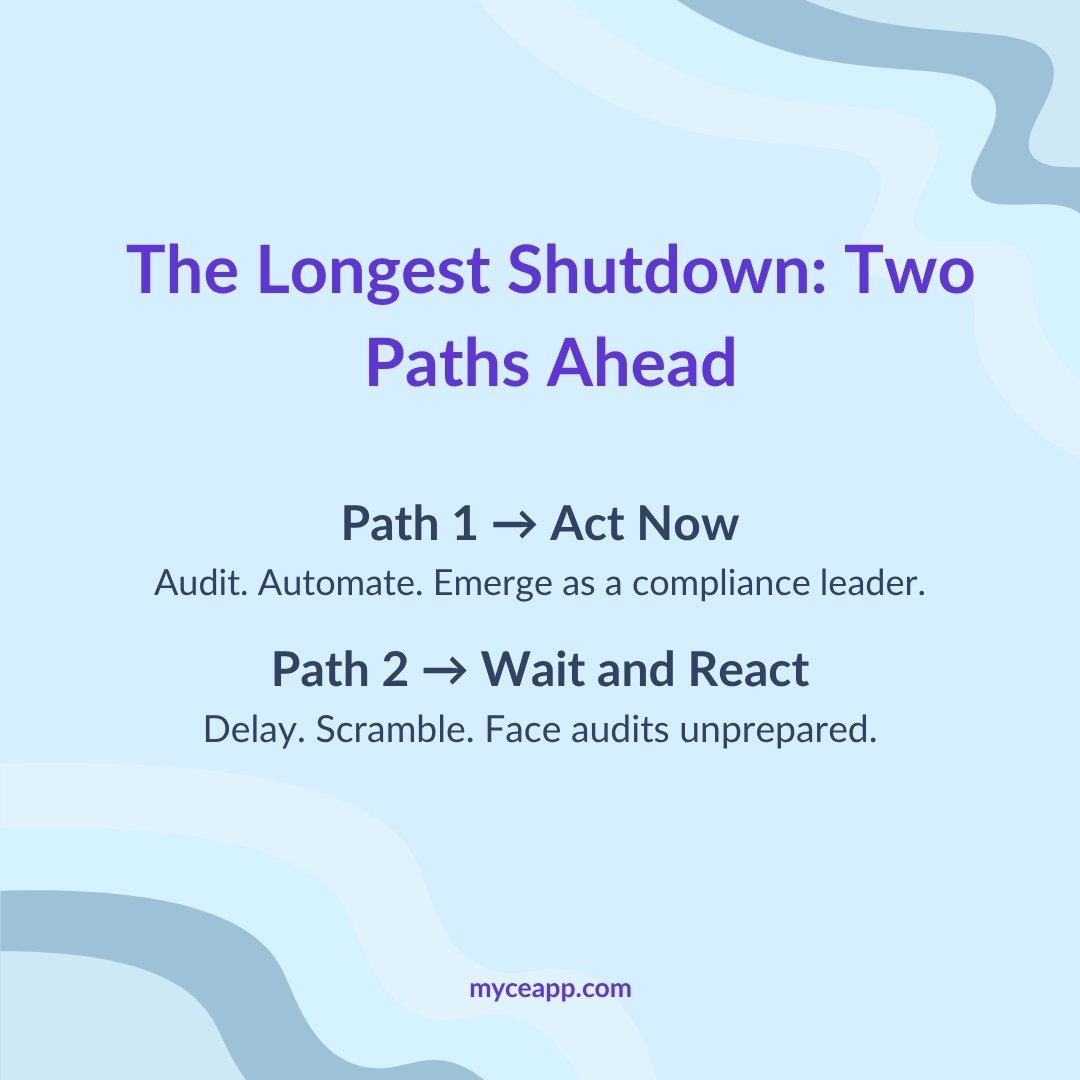
The Longest Government Shutdown: Two Paths Forward for Associations
The thesis is clear.
→ Path 1: Forward-thinking associations and organizations that act nowby conducting internal audits, identifying compliance gaps, and implementing audit-ready systems will emerge as compliance leaders when oversight resumes.
→ Path 2: Those that wait will enter reopening week unprepared, facing renewed audits, compliance backlogs, and unresolved vulnerabilities.
The shutdown’s end is imminent. These final days are the last opportunity to preparebefore regulators return.
Why This Shutdown Is Different
Every government shutdown disrupts operations.This one has fundamentally changed the compliance landscape, creating both risk and opportunity for regulated organizations.
The 2025 shutdown has now surpassed all previous records, becoming the longest federal closure in U.S. history at 42 days and counting. (Source: ABC News, 2025)1
Unlike earlier shutdowns that affected select agencies, this one has paused oversight across the board:
800,000 federal employees furloughed
2 million “essential” staff working without pay
Key regulatory bodies reduced to minimal or zero operations (Source: Reuters, 2025)2
Federal Continuing Education (CE) Oversight Is Completely Suspended
Centers for Medicare & Medicaid Services (CMS): All routine Medicare-funded recertification and initial certification activities halted; only “immediate jeopardy or actual harm” investigations continue. (Source: CMS, 2025)3
Securities and Exchange Commission (SEC): All routine examinations suspended, with only 393 of 4,289 employees active. (Source: SEC, 2025)4
Department of Labor (DOL): Non-critical inspections and compliance assistance paused. (Source: Bloomberg Law, 2025)5
Government Accountability Office (GAO): Scheduled audit meetings cancelled until reopening. (Source: Perkins Coie, 2025)6
That’s not all. Federal credential verification systems are offline. The National Institutes of Health (NIH) operates at 25% capacity. The Centers for Disease Control and Prevention (CDC) has limited communication. (Source: Reuters, 2025)2
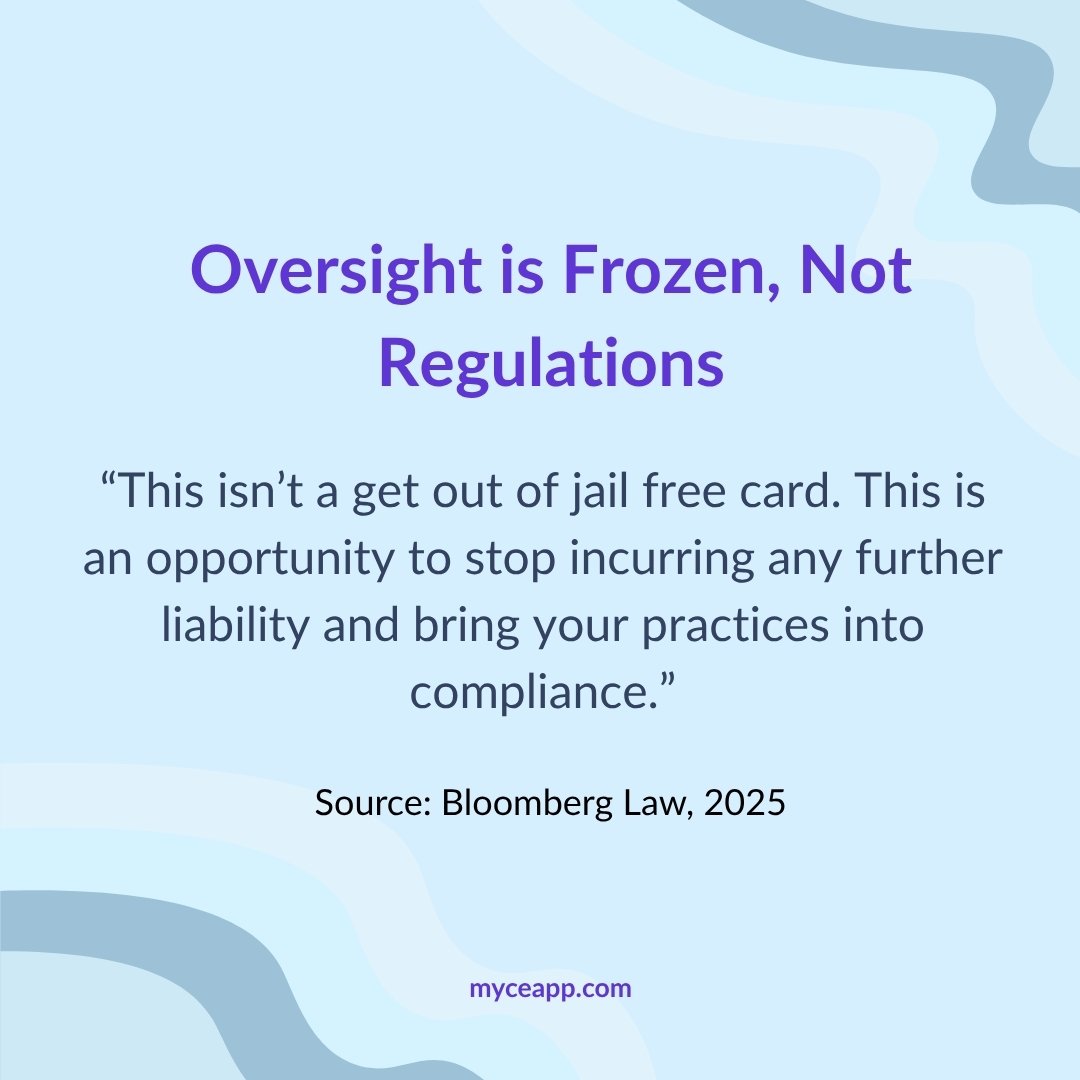
Oversight is Frozen, Not Regulations
Regulatory oversight is paused. The regulations are not. No agency has declared amnesty for compliance violations. As experts warn:
“This isn’t a get out of jail free card. This is an opportunity to stop incurring any further liability and bring your practices into compliance.” (Source: Bloomberg Law, 2025)5
The law remains in full effect. Only the enforcers are temporarily absent, and that will not be the case for much longer.
This is the compliance equivalent of an empty examination room: the test is still scheduled, the standards remain, and right now, no proctor is watching you prepare.
The Uncomfortable Truth: Compliance Gaps Are Normal and Fixable
The most significant barrier to improving CE compliance isn't technical. It's psychological. Association leaders hesitate to acknowledge compliance gaps because admitting problems feels like admitting failure.
But the data tells a different story.
Compliance Gaps Affect the Majority of Organizations
California Dental Hygienists Audit
The California Dental Hygiene Board's CE audit data recorded approximately 40% first-attempt audit failures, with failures resulting in disciplinary action referrals. (Source: California Dental Hygiene Board, 2024)7
Minnesota Board of Accountancy
From 2022 to 2024, the Board audited a portion of licensees annually and recorded73 cases of CPE non-compliance, resulting in fees and disciplinary action. (Source: Minnesota Board of Accountancy, 2024)8
Osteopathic Medical Board of California
The Board’s 2024 proposal anticipates auditing about 10% of CME renewals, with roughly 10% of audits projected to fail compliance. Non-compliant physicians would face average fines of $1,500 and be ineligible for renewal until completing missing CME. (Source: Osteopathic Medical Board of California, 2024)9
Iowa Board of Nursing
In FY2023, the Board conducted monthly random CE audits and issued 66 CE-related disciplinary cases, including $4,200 in fines. (Source: Iowa Board of Nursing, 2024)10
Kentucky State Board of Accountancy
Following the 2023 CPE compliance audit, CPAs who failed to verify hours were required to complete double the missing CPE or surrender licenses, with fines up to $1,000. (Source: Kentucky State Board of Accountancy, 2024)11
This isn't about bad actors flouting rules. It's about the complexity of CE compliance and the inadequacy of manual tracking systems.
Let’s now look at the most common gaps that lead to such compliance failures.
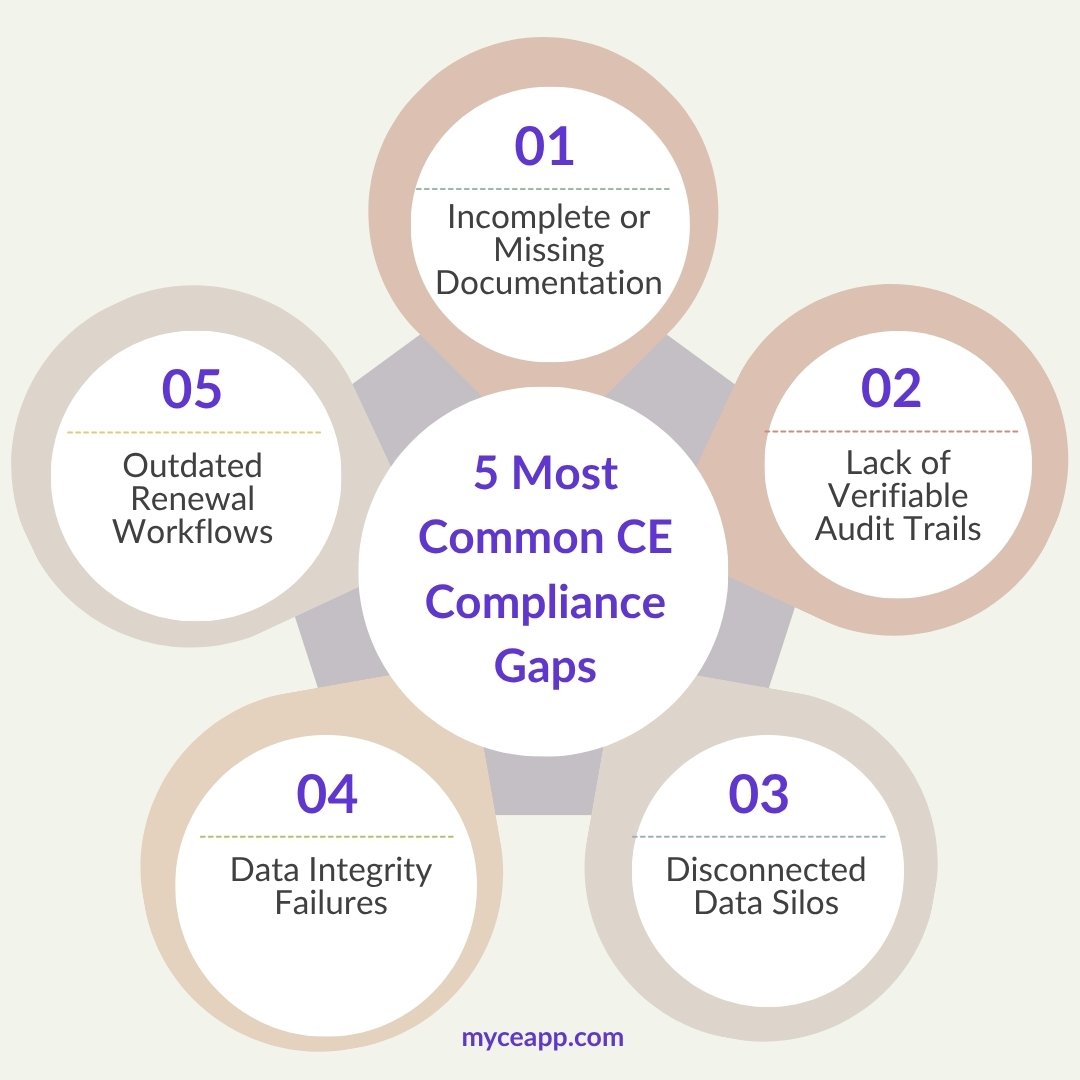
5 Most Common CE Compliance Gaps
Incomplete or Missing Documentation
Manual certificate chasing creates gaps.
Lack of Verifiable Audit Trails
Spreadsheets can't provide timestamped proof.
Disconnected Data Silos
Membership and CE data aren't integrated.
Data Integrity Failures
Manual entry creates errors and inconsistencies.
Outdated Renewal Workflows
Paper-based processes fail during disruptions.
Thecost of leaving these gaps unaddressed is significant for both individual practitioners and associations operating under renewed federal oversight once the government reopens.
The Cost When Gaps Are Discovered
When continuing education (CE) gaps emerge, the consequences reach far beyond individual learners. They expose associations and certifying bodies to compliance, reputational, and legal risk.
Oregon Board of Licensed Professional Counselors and Therapists
CE audit deficiencies carry fines from $250 to $1,000, with possible license suspension or non-renewal for continued non-compliance. (Source: Oregon Administrative Rules, OAR 833-080-0061, 2024)12
Michigan Department of Licensing and Regulatory Affairs
Failure to complete required CE may result in a $250 fine plus $50 per missing credit hour, probation, or license suspension or surrender. (Source: Michigan Administrative Code, R 339.19036, 2024)13
Oregon Board of Optometry
Licensees who fail to respond to CE audit requests within 21 days face civil penalties and a minimum 90-day license suspension for non-response or continued non-compliance. (Source: Oregon Administrative Rules, OAR 852-070-0037, 2024)14
The Organizational Risk
For associations and regulated organizations, every failed audit is a signal that compliance systems need attention. Gaps in tracking and verification slow renewals, trigger disciplinary reviews, and weaken regulatory trust.
When non-compliance spreads across members, it can jeopardize accreditation standing, complicate insurance renewals, and erode public and professional confidence.
Why This Closing Window Matters
The shutdown has created a rare and temporary environment where organizations can identify and remediate compliance gaps privately before enforcement returns.
Compliance experts agree: organizations that demonstrate proactive remediation are treated more favorably in audits than those that wait to be caught. Being able to say, “We found and fixed this issue during the shutdown,”can significantly reduce enforcement risk once reviews resume.
The takeaway is clear.
Compliance gaps are operational issues, not moral failures. This brief period presents an opportunity to address these issues before oversight resumes and before regulators begin to ask questions.
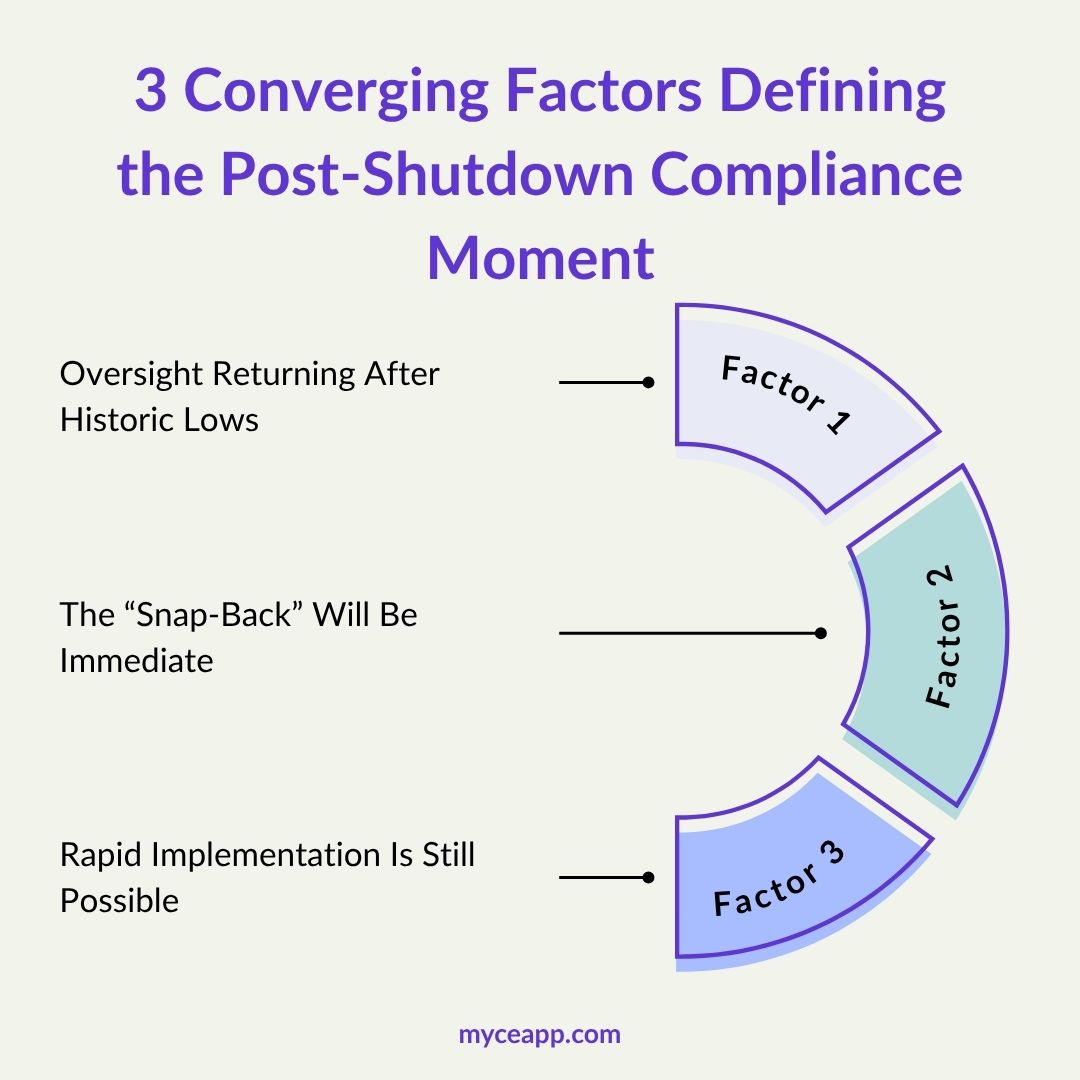
3 Converging Factors Defining the Post-Shutdown Compliance Moment
The value of this moment lies in three converging factors that are about to reshape the compliance environment.
Factor 1: Oversight Returning After Historic Lows
For more than six weeks, federal oversight has been at a record low:
CMS halted all standard surveys (Source: Stevens & Lee, 2025)15
SEC suspended all examinations (Source: ACA Group, 2025)16
Agencies will soon return with renewed enforcement mandates, clearing accumulated audits and accelerating review schedules. Organizations that used this downtime to correct internal gaps will be better positioned when verification resumes.
Factor 2: The “Snap-Back” Will Be Immediate
Shutdowns End Abruptly: When previous shutdowns ended, agencies reopened within hours of funding approval and resumed operations without transition periods. (Source: Congress.gov, 2025)17
Audits Resume Under Backlog Pressure: Once funding is restored, compliance teams face intense backlog pressure and statutory reporting deadlines. Reviews will be fast, documentation-heavy, and less forgiving.
What This Means: Automated CE systems capable of generating audit-ready reports will help organizations clear faster, while those using manual tracking will struggle to keep pace.
Factor 3: Rapid Implementation Is Still Possible
Modern CE compliance systems, such as CE App, can be configured and launched in weeks, enabling organizations to build verifiable audit trails before oversight resumes. Each day before reopening is an opportunity to finalize systems, migrate records, and train teams while enforcement remains paused.
Associations that act now will be able to restart with compliance data already documented, rather than scrambling once audits resume.
What Happens When Oversight Returns
As federal funding is restored, regulatory systems will reactivate immediately, and enforcement activity will invariably surge.
The Backlog-Driven Enforcement Surge
Agencies returning from the shutdown face intense pressure to clear accumulated audits, reviews, and compliance workloads.(Source: Deloitte Insights, 2019)18
Associations with pending audits will not get a fresh start. They will enter an overwhelmed queue processed under tight deadlines.
Retroactive Scrutiny Is Expected
Even during limited operations, regulatory deadlines and filing obligations remained in effect. For example, the Securities and Exchange Commission paused investigations but maintained disclosure requirements. (Source: CBIZ Insights, 2025)19
Organizations that let CE compliance slip or failed to maintain documentation will face retroactive reviews once federal staff return.
Documentation Determines Outcomes
When audits resume, regulators will ask one question: How was compliance maintained during the shutdown?
Associations with timestamped CE records, internal audit documentation, and automated systems will demonstrate robust readiness. Those without verifiable records risk deeper scrutiny and delayed renewals.
2 Types of Associations Will Emerge
The Prepared:
Conducted internal audits and closed compliance gaps
Implemented automated CE tracking systems
Documented every action and maintained verifiable records
Can generatecomprehensive reports on demand
Face audits with confidence
The Exposed:
Waited for oversight to resume
Continued using manual systems
Ignored known vulnerabilities
Face catch-up audits unprepared and under pressure
The difference is not luck or resources. It is the decision to act before regulators return.
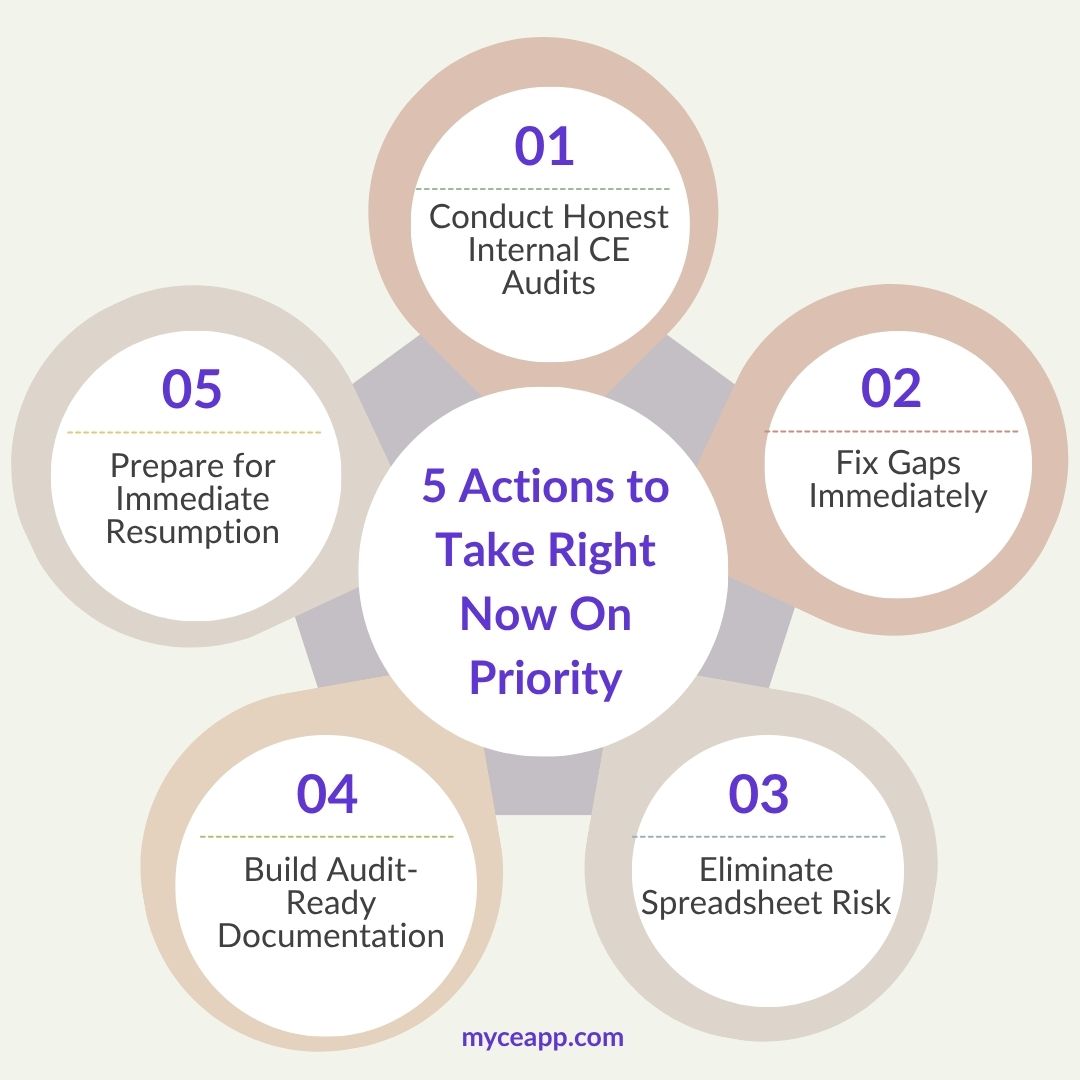
5 Actions to Take Right Now
Priority 1: Conduct Honest Internal CE Audits
Audit member records now to identify missing certificates, expired credentials, or documentation gaps before oversight resumes.
Priority 2: Fix Gaps Immediately
Facilitate make-up CE, renew stalled credentials, and document every remediation. Early action demonstrates proactive management when regulators review activity logs.
Priority 3: Eliminate Spreadsheet Risk
Manual tracking fails under disruption. Centralized CE systems, such as CE App, automate verification, reminders, and reporting to create a single source of truth.
Priority 4: Build Audit-Ready Documentation
Maintaindated CE records, internal audit notes, and communication logs. Showing continuity and accountability during the shutdown reflects a good-faith compliance posture.
Priority 5: Prepare for Immediate Resumption
Operate as if audits are already restarting. Maintain high standards, meet deadlines, and keep records up to date to ensure a seamless transition once enforcement returns.
Organizations that act now will restart ready, confident, and credible. Those who delay will scramble to catch up once regulators are back online.
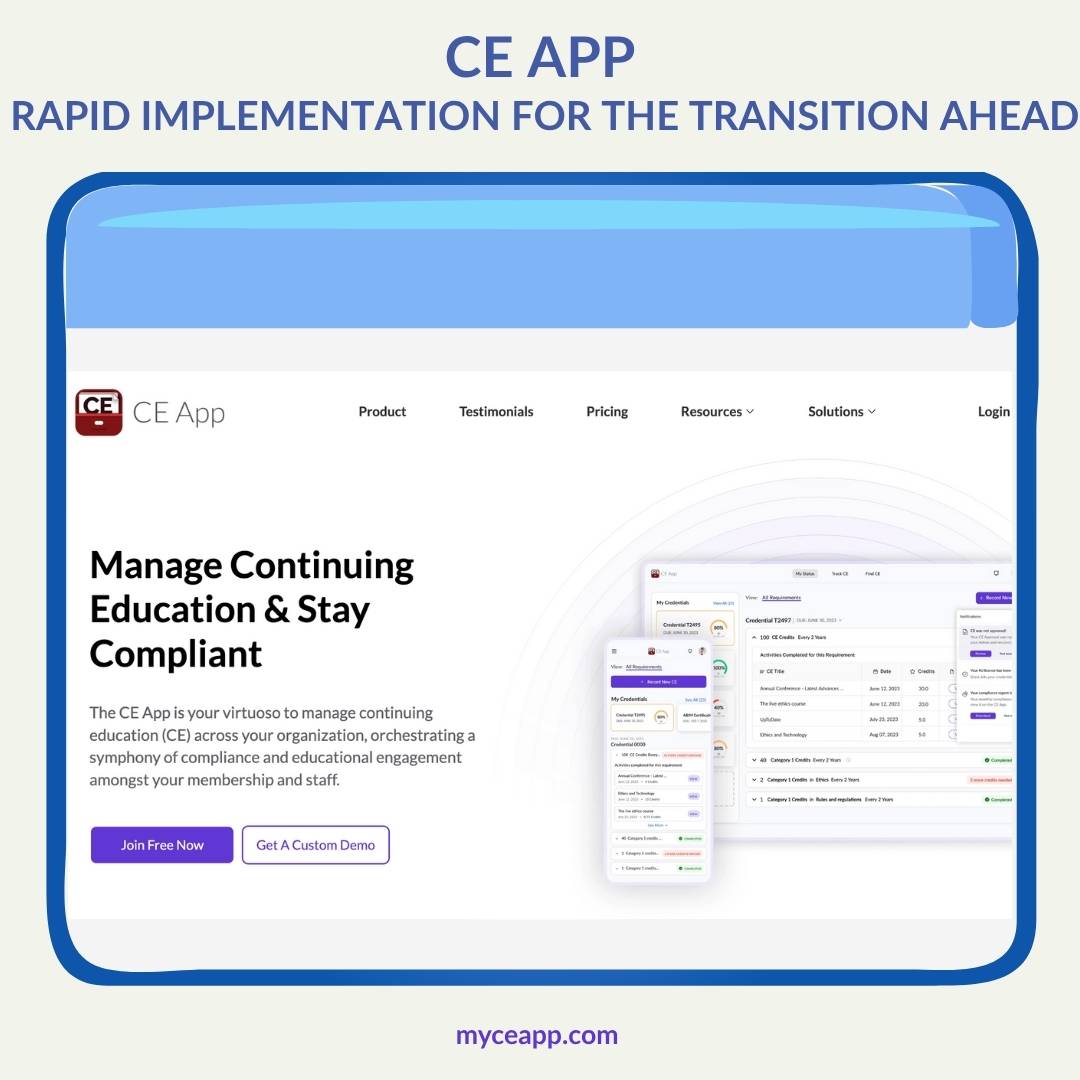
CE App: Rapid Implementation for the Transition Ahead
Forassociations and certifying organizations that recognize the urgency but feel constrained by timelines, CE App offers a purpose-built platform for fast, reliable compliance deployment.
Built for High-Pressure Transitions: 5 Core Capabilities
Centralized CE tracking eliminates spreadsheet vulnerabilities.
Flexible rules engines for multi-jurisdiction requirements.
Automated certificate collection and verification.
Membership database integration.
Comprehensive audit trails with immutable timestamps.
Implementation Speed Advantage
CE App supports rapid configuration and rollout, enabling associations to begin generating audit-ready documentation within weeks. Implementing now ensures verifiable CE data is in place when oversight resumes.
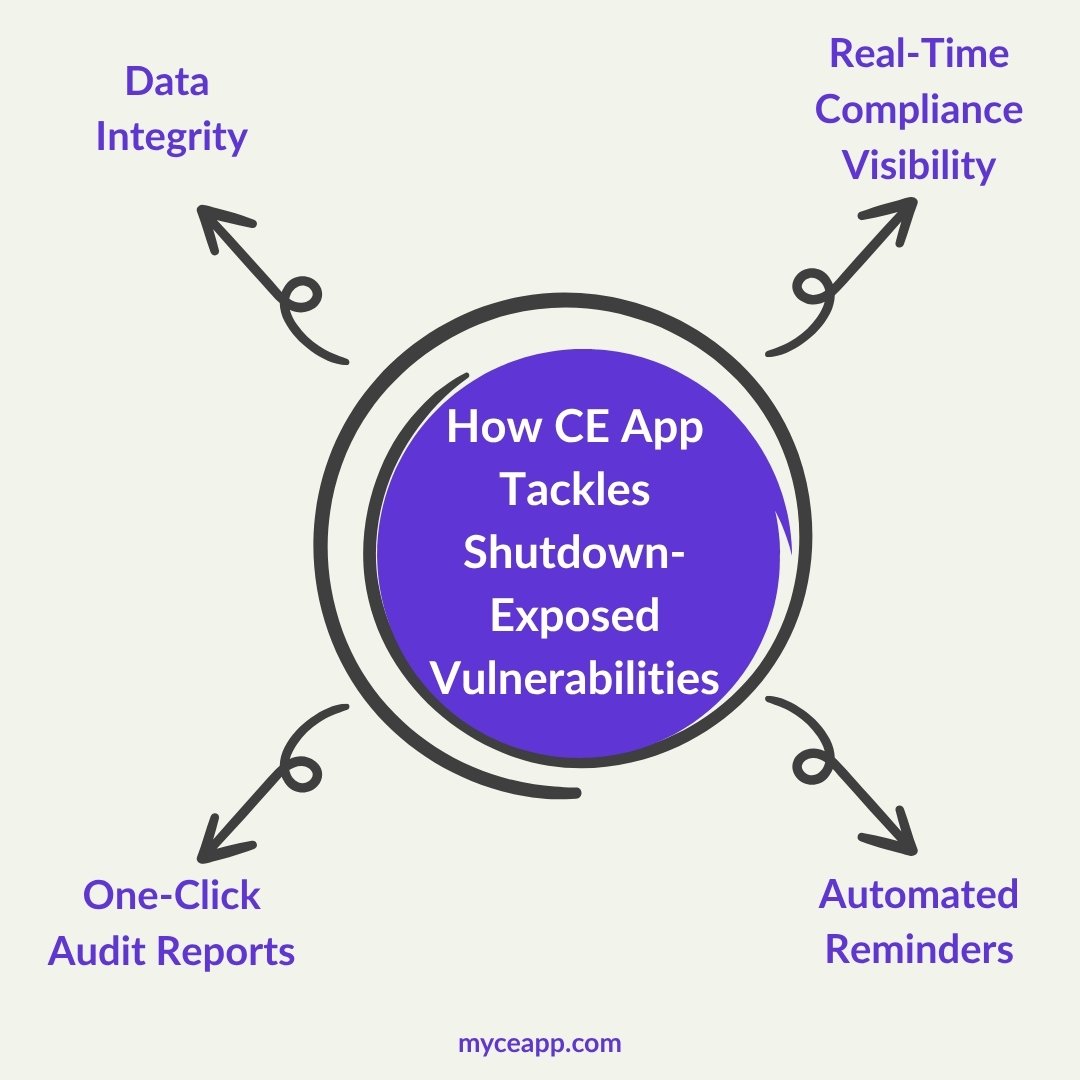
Addresses 4 Shutdown-Exposed Vulnerabilities
Real-Time Compliance Visibility
Know exactly who's compliant without manual verification.
Automated Reminders
Keep CE completion active when staff attention is divided.
One-Click Audit Reports
Prove compliance during the oversight pause.
Data Integrity
Single source of truth, eliminating manual errors.
CE App transforms compliance from vulnerability to strength, exactly what regulators seek when evaluating commitment to standards during disruptions.
The Choice: Act Now or Face Exposure
Every association and certifying organization now faces a clear decision as oversight prepares to resume.
Option 1: Act During the Window
Assess your compliance posture, close identified gaps, and implement reliable CE systems, such as CE App, to build documentation proactively while regulators finalize reopening.
Option 2: Wait
Do nothing and risk joining the post-shutdown audit surgeunprepared, with existing vulnerabilities exposed underpressure from regulators to catch up.
The Choice Is Clear
History repeats itself. Each time government operations restart, enforcement surges. The backlog is already forming, and every day lost shortens your recovery window.
Those who act now will view this not as a crisis but as an opening to strengthen systems, document performance, and emerge more compliant than before.
Take Action Now:
→ Schedule A Custom Demo: See how CE App can help your organization eliminate compliance backlogs, automate tracking, and stay audit-ready as oversight resumes.
→ Book a Free CE Strategy Session [$2,500 Value]: Meet with our compliance experts to assess your current CE operations, pinpoint vulnerabilities, and create a rapid-readiness plan before audits restart.
Don’t wait until oversight returns. Connect with our team today and build the compliance resilience your organization needs for the months ahead.
Frequently Asked Questions
Need help? Start here for fast solutions.
As of publication, it has reached Day 42, making it the longest in U.S. history, with reopening expected within days.
Yes. Agencies will resume audits and enforcement almost instantly to clear large backlogs.
Regulatory oversight pauses, but CE requirements remain fully in effect and subject to later review.
Acting now allows organizations to fix gaps privately and build documentation before regulators return.
Missing certificates, poor audit trails, disconnected data, and outdated renewal workflows are the top causes of non-compliance.
State boards can issue fines from $250 to over $1,000, impose probation, or suspend licenses.
By auditing member records, updating systems, and documenting all remediation efforts before enforcement restarts.
CE App automates CE tracking, reminders, and reporting, helping associations prove compliance instantly when audits resume.
CE App supports rapid configuration, allowing organizations to start generating audit-ready data fast.
Treat these final days as a transition window to strengthen compliance systems and restart operations audit-ready.
Learn more about the CE App
See how your organization can use CE App to increase revenue and improve continuing education compliance.